

 By
By 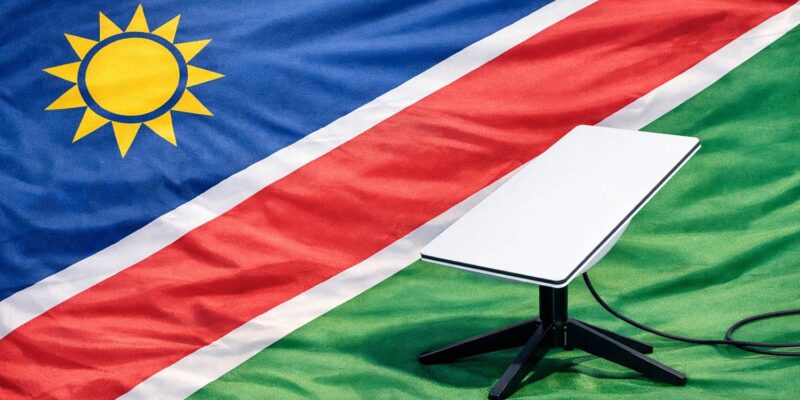
The Communications Regulatory Authority of Namibia (CRAN) has firmly rejected an appeal by Elon Musk’s satellite internet provider, Starlink, to operate within the country, citing strict local ownership laws and missed filing deadlines. This make the country one of around 26 African nations without official Starlink authorisation.
On Monday, CRAN announced the dismissal of more than 600 appeals challenging its initial March decision to deny Starlink’s operating license. Among the 624 reconsideration requests, only two met the necessary jurisdictional threshold for review, and both were ultimately dismissed for lacking sufficient legal or factual grounds to overturn the ruling.
Starlink Internet Services Namibia Ltd.’s direct appeal was thrown out because the company missed the 90-day statutory deadline to file its challenge. A separate public petition supporting Starlink, backed by approximately 5,000 Namibians, was rejected for the exact same procedural reason.
The core issue blocking Starlink’s entry is Namibia’s stringent telecommunications framework. National law prohibits foreign individuals or corporations from controlling telecommunications licensees, capping foreign ownership at 49 percent. Exemptions can only be granted by the communications minister.
While CRAN acknowledged that Low Earth Orbit (LEO) satellite technology could significantly aid national connectivity goals, it emphasised that all operators must adhere to domestic legal frameworks.
The regulatory blockade in Namibia contrasts with the approach taken by several other African nations. Recognising the high demand for fast broadband, especially in remote areas underserved by traditional infrastructure countries like Zimbabwe, Lesotho, and the Democratic Republic of Congo have recently relaxed their local-ownership requirements to accommodate Starlink.
Even South Africa, Musk’s birthplace, is actively reviewing its telecommunications regulations. The South African government is exploring equity-equivalent programs, which would allow foreign companies to meet empowerment requirements through investments in local services and businesses, rather than forcing them to surrender 30 percent of their corporate equity.
Starlink has not yet publicly commented on CRAN’s latest ruling.












Comments