

 By
By 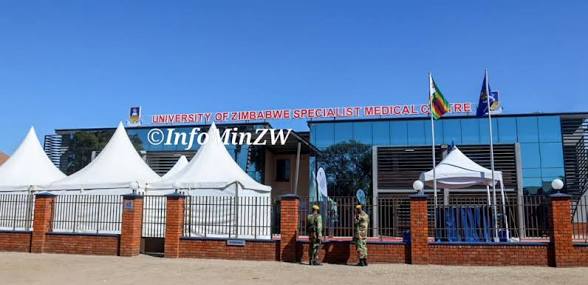
By Ross Moyo
President Emmerson Mnangagwa yesterday officially commissioned two major projects at the University of Zimbabwe — an Industrial Incubation Centre and a Specialist Medical Centre.
Speaking at the UZ Diamond Conference Centre on 27 July 2026, the President and Chancellor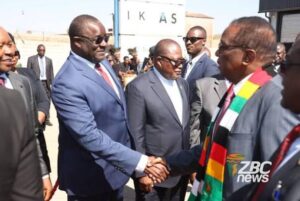 opened the University of Zimbabwe Industrial Incubation Centre and the Specialist Medical Centre, part of the Quinary Hospital being built in the university’s Industrial Park. According to the Head of State and Government, the Industrial Incubation Centre is turning student ideas into businesses. The President described the Industrial Incubation Centre as the final stage of UZ’s innovation pipeline. Ideas begin in laboratories and workshops, move to the Innovation Hub for prototyping, and then graduate to the Incubation Centre for commercialisation and market entry.
“What makes this significant is that the start-ups hosted here are student-led, coming from final year projects, research and scholarly work,” Mnangagwa said.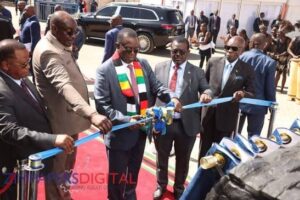
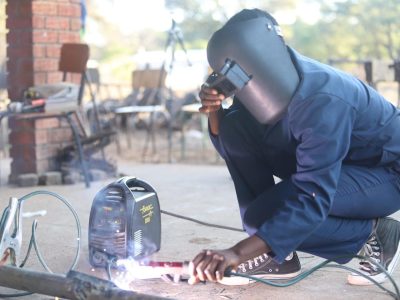
“There is scope for student-led start-up companies under institutions of higher learning to produce a wider range of products with direct bearing on the needs of our economy,” announcing that 11 student-led companies are already resident at the Centre. Under his administration, he said, promising innovations will continue to be granted “Innovation Hub Status” and receive government support.
The President linked the facility directly to Zimbabwe’s import bill. Last week at the Inaugural Industrialisation Conference, he noted, it was revealed that the country spends about US$2.5 billion annually on manufactured goods that could be produced locally.
He challenged the Ministry of Higher and Tertiary Education, universities, industry and financial institutions to scale up support. The Centre, he added, must evolve beyond a workspace into “an industrial production hub that supports manufacturing, technology development, value addition and enterprise growth.”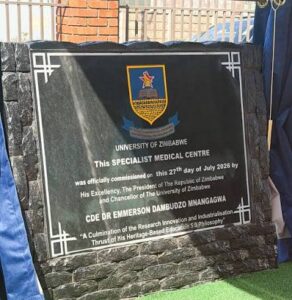 SMEs were urged to take advantage of the services offered.
The Chancellor of the University of Zimbabwe also mentioned a specialist medical centre is going to bring expensive care closer to home. This second facility commissioned was the Specialist Medical Centre, which will offer oral health, eye care, trauma services and assisted reproduction through in-vitro fertilisation (IVF).
The President said services such as IVF have previously only been available in the private sector, putting them out of reach for most Zimbabweans.
“Hence, the establishment of the Facility, with its specialists and high-end health care, dovetails with my Administration’s core development principle that leaves no one and no place behind,” he said.
Beyond patient care, the Centre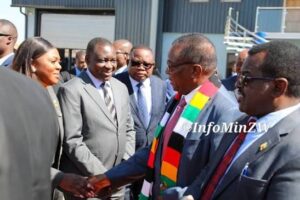 is expected to help train more eye specialists, dentists and other health professionals, addressing critical skills shortages. It also complements the ongoing Presidential Hospital Renovation and Modernisation Programme.
Looking ahead, the President said he expects the full Quinary Hospital to be completed soon to further modernise the national health delivery system and advance Universal Health Coverage.
The Commander in Chief of the Zimbabwe Defense Forces also cited a crackdown on the health sector he termed “CARTELS”. In strong remarks, Mnangagwa directed the Ministry of Health and Child Care to remove barriers to setting up specialist health facilities.
“Hatidi ma gate-keepers, nema cartels mu health sector, vanhu vedu vachitadza kurapwa zvakanaka, nemutengo uripasi. Kwete. Ngative nehanya, tikoshese hutano we vanhu vekwedu,” he said.
Translation: “We do not want gate-keepers and cartels in the health sector, where our people fail to get proper treatment at an affordable price. No. Let us care and value the health of our people.”
“My Government will not accept the prevalence of opportunists and so-called health sector ‘cartels and syndicates’ who operate to the detriment of our people. Let those with ears hear this stern exhortation.”
He also called for all new health facilities to be equipped with modern, state-of-the-art equipment to improve service delivery and retain foreign currency spent on medical tourism.
The Chancellor of All State Universities said he sees Universities as engines of development.
The President said the two projects validate Education 5.0, which shifts universities from teaching-only institutions to drivers of research, innovation and industrialisation.
He praised UZ for hosting the 7th Research Innovation and Industrialisation Week in May and for showcasing cutting-edge innovations.
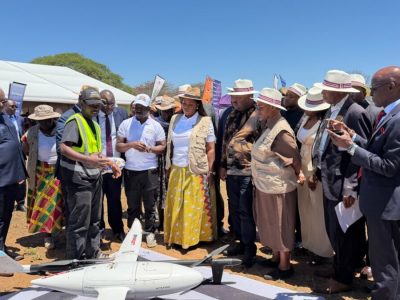
He highlighted work already underway: indigenous herbal formulations for medicines and cosmetics, smart agricultural equipment, solar-powered systems and drones for precision agriculture. On minerals, he said the establishment of a National Minerals Research Centre to add value to lithium, rare earth elements and uranium was “now urgent.”
“As Chancellor, I want to emphasise the importance of this strategic national assignment, which I require universities to carry out with utmost diligence, honesty and integrity, for the benefit of both present and future generations,” he said.
The President closing his address, said universities must take responsibility to build the country.
“The wide range of products and services… are a reflection that we can achieve Vision 2030 and build the Zimbabwe we all want, through our own capacity and skills. Nyika inovakwa, inotongwa, inonamatirwa nevene vayo,” he said. 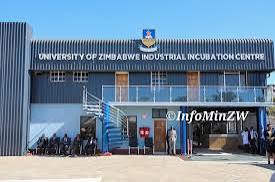
With that, he declared the University of Zimbabwe Industrial Incubation Centre and Specialist Medical Centre officially commissioned.
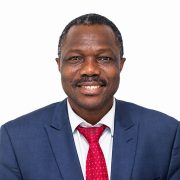
The event was attended by Vice Presidents Gen. Retired Dr. C.G.D.N. Chiwenga and Col. Retired Dr. K.C.D. Mohadi, Ministers, senior government officials, UZ Vice Chancellor Prof. Paul Mapfumo and university council members.









Comments