

 By
By 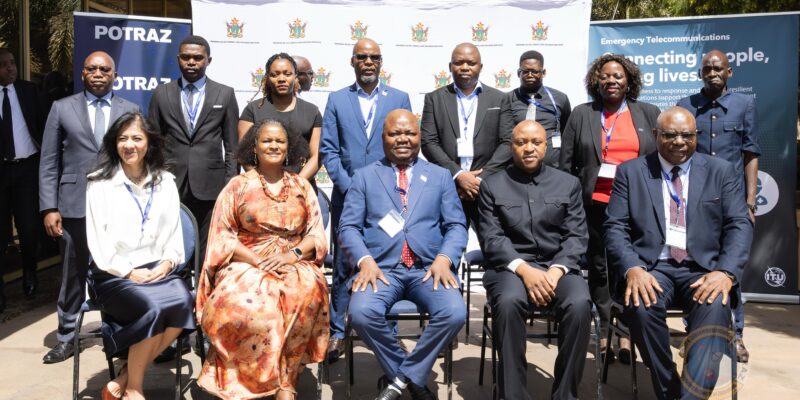
- The International Telecommunication Union (ITU) has intensified efforts to strengthen disaster resilience across Southern Africa through the development of National Emergency Telecommunications Plans (NETPs) and expanded regional capacity building initiatives.
The renewed push was highlighted at the ITU–SADC Emergency Telecommunications and Early Warning for All (EW4All) Regional Capacity Development Workshop 2026, where ITU representative Halima Letamo underscored the growing importance of resilient communication systems in the face of escalating climate-related and humanitarian emergencies.
Explaining the framework behind the initiative, Letamo said emergency telecommunications work cuts across the Union’s three core pillars that are radiocommunication, standardisation and development.
“Emergency telecommunications is not a standalone activity, It draws from our work in spectrum management, satellite coordination, standardisation and development to ensure that communication systems remain operational when disasters strike,” said Letamo.
Under radiocommunications, the ITU oversees spectrum allocation and satellite coordination, both critical when terrestrial infrastructure is damaged.
Through standardisation, the organisation ensures the working together between systems, while its development sector supports member states in expanding access to ICTs and strengthening institutional capacity.
Letamo said the integration of these pillars is essential during emergencies, when rapid deployment of equipment and coordinated response mechanisms are required to restore vital communication links.
“Our objective is to enhance resilience by building disaster-resilient ICT infrastructure and strengthening policies that reduce loss of life and property damage,” she said.
“Preparedness is key. The stronger the systems in place before a disaster, the faster the recovery.”
Central to this approach is the development of comprehensive National Emergency Telecommunications Plans.
Letamo explained that these plans outline actions to be implemented throughout the disaster management cycle, including preparedness, response and recovery as well as regulatory considerations.
Beyond planning, the ITU is investing in capacity building, including simulation exercises designed to test national preparedness and improve response coordination.
Countries supported in Southern Africa include Namibia, Zimbabwe, Malawi and the United Republic of Tanzania, all of which have received assistance in developing emergency telecommunications frameworks.
In addition, Zimbabwe hosts a regional emergency telecommunications equipment hub, which has been capacitated to deploy ITU equipment across the Southern African region during disasters.
“The regional hub in Zimbabwe is not only a national asset but a regional one, It allows for quicker mobilisation of emergency telecommunications equipment to countries in need within Southern Africa” said Halima Letamo.
She warned that the region continues to face increasing threats from extreme weather events, floods, tsunamis, pandemics and other natural and human-induced hazards, placing greater pressure on governments to modernise emergency communication systems.
“Without resilient and interoperable communication systems, coordination during disasters becomes extremely challenging,” said Letamo
To complement national efforts, the organisation is also offering free training courses through the ITU Academy, covering disaster response, the Tampere Convention and the development of NETPs.
As the workshop progresses, participants are expected to share national experiences, identify existing gaps and propose practical solutions to strengthen emergency telecommunications frameworks across the region.
“Collaboration between SADC member states and the ITU will be critical in ensuring that no country is left behind in building resilient communication systems”, she said.
Letamo sighted that they are moving from discussion to action for the betterment of everyone.











Comments