

 By
By 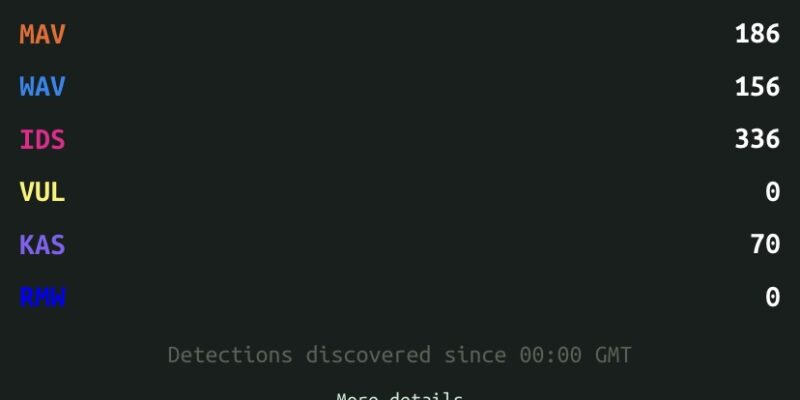
Streams of glowing lines shoot across a digital globe every second, tracing cyberattacks in real time as hackers, malware and ransomware campaigns move across continents.
For Zimbabwe, the data paints a growing warning, the country is now ranked the 138th most attacked nation in the world on the Kaspersky Cyberthreat Real-Time Map.
The Kaspersky Cyberthreat Real-Time Map is an interactive online platform that visualises global cyber threats as they happen.
Powered by anonymous telemetry from the Kaspersky Security Network, the system collects malware detections and cybersecurity incidents from millions of devices worldwide.
For Zimbabweans increasingly dependent on mobile banking, e-commerce, internet connected businesses and digital government services, the map highlights how the country is part of a constantly evolving cyber battlefield.
Users can switch between a rotating 3D globe and a flat 2D map, zoom into countries and monitor attack activity live.
The platform also allows viewers to toggle between dark and light display modes and activate a demonstration feature that automatically flies through global cyber hotspots.
When users click on Zimbabwe, the system displays the country’s current threat ranking, historical spikes in attacks and the types of malware most frequently detected.
According to the latest live statistics, Zimbabwe is ranked 138th globally among countries experiencing cyber threats.
The colorful pulses and attack lines shown on the platform represent different categories of cybersecurity detections.
“OAS,” or On-Access Scan, records malware detected during everyday computer activity such as opening or copying files. “ODS,” or On-Demand Scan, tracks threats discovered during manual virus scans.
“WAV” and “MAV” monitor malicious websites, downloads and infected email attachments.
“IDS,” or Intrusion Detection Scan, focuses on suspicious network activity including brute-force attacks and exploit attempts, while “RMW” tracks ransomware detections.
The platform helps visualise how automated attacks constantly probe internet connected systems around the world, including countries with smaller digital economies such as Zimbabwe.
As Zimbabwe expands its digital infrastructure through online banking platforms, smart technologies and cloud-based services, experts warn that weak passwords, outdated software and phishing scams continue to expose businesses and institutions to cyber risks.
The platform also provides live counters showing detections per second, daily infection trends and lists of the world’s most targeted countries.
Detection totals reset every day at midnight GMT, meaning rankings fluctuate continuously depending on ongoing attack activity.
The map offers a stark reminder that cyber threats are no longer distant problems affecting only major powers, from ransomware and phishing scams to network intrusion attempts, Zimbabwe remains connected to a global cyber landscape that operates every second of the day.













Comments