

 By
By 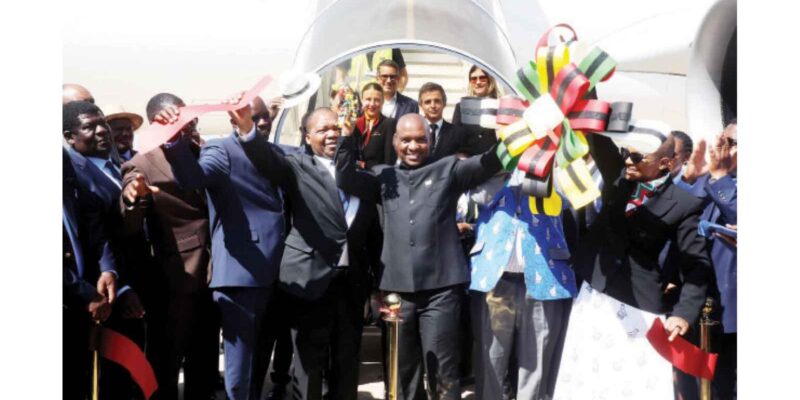
By Ross Moyo
Mutapa Investment Fund CEO Dr John Panonetsa Mangudya is driving a turnaround at Air Zimbabwe and other state entities under Mutapa’s portfolio.With results visible as Air Zimbabwe relaunched Harare–London flights on 22 July 2026 at the Robert Gabriel Mugabe International Airport, the operational base for the carrier’s revival, restoration of profitability, governance, and strategic service delivery in state-owned enterprises is now inevitablyon the horizon.Through balance-sheet restructuring, fleet discipline via ACMI, route economics, and board accountability this is set to be achieved.
The Airbus A330-300 parked at RGMI on Monday is more than a plane. It’s a policy statement. For Mutapa Investment Fund CEO Dr John Panonetsa Mangudya, Air Zimbabwe’s return to London is the clearest signal yet that state entities can fly — commercially.
Since Mutapa was designated immediate shareholder of Air Zimbabwe, Dr Mangudya has enforced a new flight plan: no bailouts, only business cases. Legacy debt was ring-fenced, procurement tightened, and loss-making routes cut. The London relaunch uses a wet-leased A330 from Plus Ultra, keeping capex off the balance sheet while Air Zimbabwe controls sales and marketing.
Transport Minister Felix Mhona said the launch was “historic” after a 16-year hiatus. He credited “the enabling working environment inspired by President Mnangagwa” and said Air Zimbabwe is now “one of the investee companies of the Mutapa Investment Fund.” The ministry confirmed the airline has already logged 1,479 passenger bookings and 30+ tonnes of cargo before the first flight.
Dr Mangudya’s Mutapa model extends beyond aviation. Across energy, mining, and logistics, investee firms are being pushed toward productivity, transparency, and dividend culture. At Air Zimbabwe, that meant grounding sentiment and installing metrics: load factors, yield, on-time performance, and cost per available seat kilometer.
CEO Edmund Makona said Mutapa’s oversight “unlocked operational discipline.” With the A330, the carrier returns to a flagship route with 302 seats and a commercial partner in Plus Ultra handling aircraft, crew, maintenance, and insurance.
Board chair Dr Silvanos Gwarinda said the Zimbabwe–UK corridor shows RGMI can be “the real and natural Aviation Hub for the SADC Region.” For Dr Mangudya, it’s proof of concept: state entities, properly governed, can compete. The turnaround isn’t complete, but the wheels are up.












Comments