

 By
By 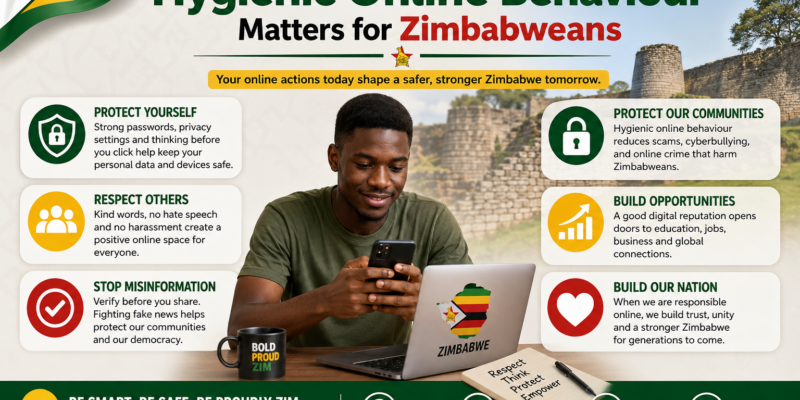
Just as brushing teeth daily prevents cavities and disease, simple online habits can protect Zimbabweans from identity theft, hacked accounts, financial scams and digital burnout in an increasingly connected world.
The practice, known as “hygienic online behaviour” or digital hygiene, refers to routine actions people take to secure their devices, protect personal information and maintain healthy internet use.
As Zimbabwe’s reliance on mobile money, online banking and social media grows, poor online habits are leaving many users vulnerable to cybercrime.
Digital hygiene is built around three main areas which are protecting devices and accounts, managing online privacy and maintaining mental wellbeing in the digital space.
At its core, digital hygiene involves simple, repeatable habits such as using strong passwords, enabling multi-factor authentication, updating software regularly and backing up important files.
Cybersecurity specialists recommend using long, unique passwords for every account rather than recycling the same password across multiple platforms.
Password managers such as Bitwarden or 1Password can help users generate and securely store passwords.
Multi-factor authentication, commonly known as MFA, is also considered one of the strongest defences against account theft.
The feature adds a second verification step such as a code sent to a phone or authentication app, before someone can log into an account.
For Zimbabweans using mobile banking and mobile money services, enabling MFA on email accounts and financial apps can significantly reduce the risk of fraud and unauthorized access.
Software updates are another critical part of digital hygiene, as many updates contain security patches designed to close vulnerabilities exploited by hackers.
Turning on automatic updates ensures phones, laptops and apps remain protected against newly discovered threats.
Regular backups are equally important, especially in Zimbabwe where intermittent electricity supply and device damage can result in sudden data loss.
Cybersecurity experts recommend saving important documents, photos and work files to external hard drives or secure cloud storage platforms such as Google Drive.
Digital hygiene also extends to privacy and online behaviour as experts warn against oversharing personal details such as home addresses, travel plans, banking information or national identification numbers on social media platforms.
Public posts can expose users to scams, impersonation and targeted fraud.
Reviewing app permissions is another recommended practice as many applications request access to cameras, microphones, contacts or location services even when such access is unnecessary.
Users are encouraged to regularly audit and revoke permissions they do not need.
Public Wi-Fi networks can also pose security risks, as conducting sensitive transactions such as internet banking on unsecured public connections unless a trusted virtual private network, or VPN, is used.
Beyond cybersecurity, digital hygiene also focuses on mental and emotional wellbeing, as excessive screen time, constant notifications and exposure to online conflict can contribute to stress and anxiety.
Setting screen-time limits, muting unnecessary notifications and creating phone-free spaces such as bedrooms are among the strategies recommended to maintain healthier digital habits.
With internet access expanding across Zimbabwe, digital hygiene is becoming as essential as physical security.












Comments