

 By
By 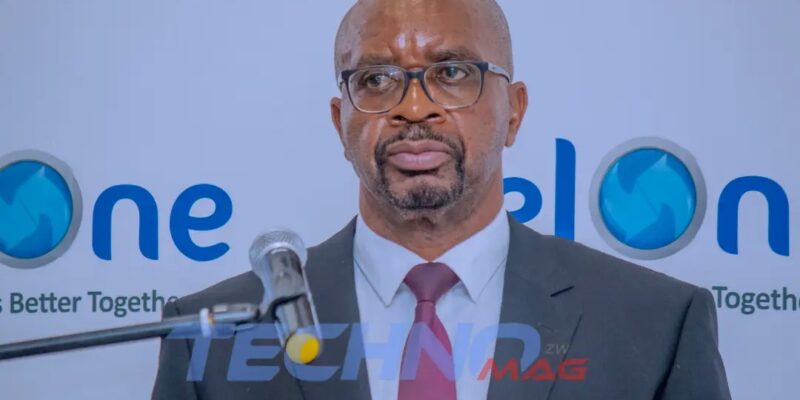
By Ross Moyo
TelOne has flagged a deteriorating cash position as its biggest risk heading into the 2026-2030 Strategic Plan, with Government debt now the single largest drag on infrastructure rollout. The disclosure was made at the company’s 12th Annual General Meeting held at the TelOne Centre in Harare today.
The immediate pressure point is money owed by the State. Receivables from Government rose 163% to ZWG857.8 million by December 2025, from ZWG325.3 million in the prior year. TelOne said the spike “directly pressures working capital and limits the ability to fund capex”, forcing the company to either borrow or defer critical network investment at a time when data demand is surging.
CEO Engineer Lawrence Nkala, who officially took the helm in July 2023, said the debt situation is now urgent. “Government debt is the most immediate constraint we face,” Nkala told shareholders. “When the largest customer is also the slowest payer, it creates a liquidity gap that slows FWA and fibre expansion. We are actively engaging for structured settlement frameworks to convert earned revenue into infrastructure.”
The next agenda for the board is the legacy debt burden. According to the AGM, TelOne is carrying a ZWG10.95 billion legacy loan book, equivalent to about US$421.59 million. The report states the debt “limited new funding and slowed digital transformation” because lenders see higher risk on the balance sheet. To address this, TelOne is pursuing a debt warehousing strategy to ring-fence inherited obligations and make its ZWG1.4 billion net asset base bankable again.
Currency and regulatory uncertainty are compounding the funding squeeze. Nkala noted that “concerns around currency volatility, economic uncertainty, and the regulatory landscape” have slowed investment inflows and partnership execution. In a volatile FX environment, multi-year capex planning becomes harder and foreign partners become risk-averse, the company said.
The domestic funding market is offering little relief. TelOne reported that capital mobilisation “remained constrained” due to a shallow local market and cautious lenders. Equity markets are thin, leaving the telco dependent on internal cash and short-term facilities, which are expensive and mismatched to long-term infrastructure like FWA and fibre.
Operational shocks are adding cost on top of the financial pressure. TelOne recorded 336 copper theft incidents in FY2025, resulting in a combined US$711,554 loss from restoration and revenue downtime. That eroded EBITDA by 1.3%. Management said every vandalized route requires cash that could otherwise fund Fixed Wireless Access expansion, describing it as “a tax paid to copper exposure.”
Despite the constraints, TelOne is still investing for growth. The company spent US$7.6 million on FWA and Fibre in 2025, data usage rose 60%, broadband now accounts for 81% of revenue, TelOne Connect Voice was launched, and Starlink revenue grew 17x to US$3.7 million. These are signs of a business adapting to demand even under a tight balance sheet.
The 2026 outlook is conditional on macro and policy action. Nkala said successful execution of the 5-year plan is “anchored on a positive economic environment characterized by GDP growth, low and stable inflation rates sustained by fiscal and monetary policy discipline.” The policy implications are clear: structured settlement of the ZWG857.8m Govt debt, accelerated debt warehousing of ZWG10.95bn, and a stable regulatory/FX regime. Without them, TelOne’s 2026 Annual Plan risks being under-capitalized, even as demand remains strong.










Comments