

 By
By 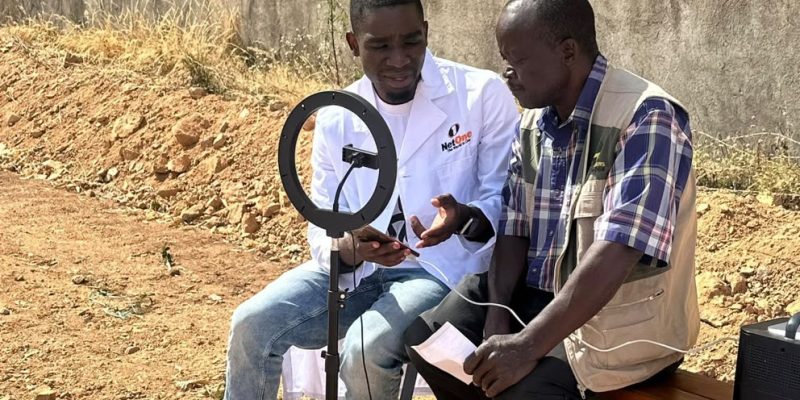
By Ross Moyo
In Mutasa, the nearest clinic can be hours away on foot. For a mother with a sick child, that distance is not a statistic. It is the difference between care and no care.
That is the gap state-owned mobile operator NetOne says it is trying to close.
Through its NetOne @30 Medical Outreach Initiative, implemented in partnership with ZimSmart Villages, the company has launched a nationwide programme targeting 90,000 households across 30 districts — an average of 3,000 households per district.
The Mutasa outreach, held last week, is the latest leg of that rollout.
The numbers behind the outreach
The programme is anchored on three figures: 30 districts to be covered nationally, 90,000 households total target, and 3,000 households per district.
NetOne is framing the initiative under its Health and Care pillar as part of its 30th anniversary. The company says the programme aligns with three Sustainable Development Goals — SDG 3 on Good Health and Well-being, SDG 10 on Reduced Inequalities, and SDG 17 on Partnerships for the Goals.
Why it matters now
The outreach comes as Zimbabwe implements the National Development Strategy 2 and Vision 2030, both of which prioritise human capital and access to social services.
Mobile penetration in Zimbabwe is above 90 percent, but access to primary healthcare remains uneven. Ministry of Health and Child Care data shows that in some rural districts, communities still travel more than 10 kilometres to the nearest health facility, with staffing and transport costs adding to the burden.
For telecoms, the pressure is also commercial — to demonstrate social impact beyond voice, data and mobile money.
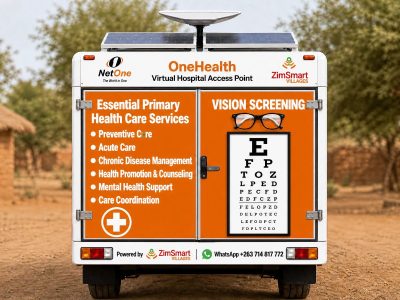
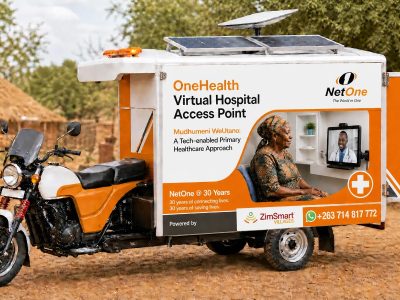
The model NetOne and ZimSmart Villages are piloting is to use existing telecoms infrastructure as a bridge — bringing health professionals, health information and screening services closer to communities, while testing telemedicine linkages that can reduce the need for travel.
Speaking on behalf of NetOne, Public Relations Manager Ernest Magadzire said the company wanted its 30th anniversary to go beyond connectivity.
“For 30 years, NetOne has connected Zimbabweans. As we celebrate this milestone, we want connectivity to mean more than communication. We want it to connect people to healthcare, information, opportunity and essential services, especially in communities that need them most,” Magadzire said.
ZimSmart Villages Chief Operations Officer Tawanda Njerere said the collaboration seeks to make technology practical for rural health access.
“Technology only becomes meaningful when it solves a real problem for people. Through our collaboration with NetOne, we are using connectivity as a bridge between rural communities and healthcare professionals, helping bring healthcare closer to the people,” Njerere said.
Government backing
The Mutasa outreach was attended by Minister of Defence Hon. Oppah Muchinguri-Kashiri and Minister of State for Manicaland Province Hon. Misheck Mugadza.
Minister Muchinguri-Kashiri said initiatives that decentralise essential services complement national development objectives.
As we pursue the aspirations of Vision 2030 and implement NDS2, we must continue to harness innovation, technology and partnerships to improve the quality of life of our people. Healthcare is fundamental to development because healthy communities are better positioned to participate meaningfully in the social and economic development of our country, she said.
The gap between connectivity and care
Officials framed the programme as an example of private sector complementing public health efforts. What remains unclear is what happens after the outreach trucks leave.
Key questions for the next phase of reporting include what specific clinical services were offered in Mutasa — screening, medication, referrals — how patient follow-up and continuity of care will be managed beyond a one-day camp, and how telemedicine will work in areas where smartphone penetration, digital literacy and network consistency remain low.
For now, in Mutasa, the immediate measure was not in reports or targets. It was in families who accessed care closer to home — a first step in turning a telecoms signal into a health service.









Comments