

 By
By 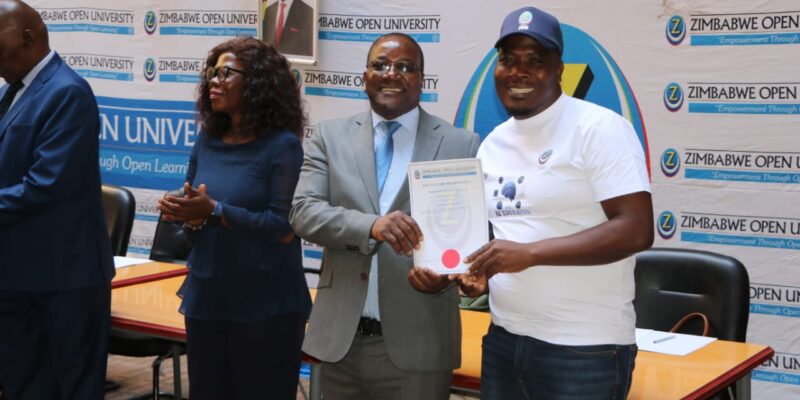
The Zimbabwe Open University (ZOU) has certified 78 educators under its pioneering Artificial Intelligence (AI) for Educators Programme, marking a significant step in the country’s efforts to modernise education and equip teachers with digital skills for the future.
Speaking at the event, Permanent Secretary for Higher and Tertiary Education, Innovation, Science and Technology Development Professor Fanuel Tagwira said artificial intelligence was not intended to replace teachers but to enhance their effectiveness in the classroom.
“AI is a technological force for socio-economic transformation,” said Prof Tagwira. “It can support lesson planning, personalised learning and inclusive education while ensuring that teachers remain at the centre of shaping responsible, ethical and productive citizens.”
He said the initiative aligns with the Government’s modernisation agenda and efforts to prepare Zimbabwe’s education sector for the demands of a rapidly evolving digital world.
ZOU Vice Chancellor Professor Emeritus Paul Gundani said the university was committed to producing graduates who are technologically proficient while remaining grounded in ethical and cultural values.
He described artificial intelligence as a powerful tool that must be guided by national principles and the Zimbabwe National AI Strategy.
“Developing a digitally fluent population is essential for leveraging AI’s potential for inclusive growth and sustainable development,” said Prof Gundani. “AI is a tool of empowerment, a catalyst for inclusive growth and a guardian of our cultural values and ethics.”
For many participants, the programme has transformed their perceptions of artificial intelligence and its role in education.
One of the graduates, Gift Dumbarumwe, said the training helped him overcome fears that AI could threaten his career.
“Before this course, I feared that AI might one day leave me jobless. My students were always ahead digitally, and that gap affected my confidence,” he said.
Dumbarumwe said the programme introduced educators to practical AI tools that can reduce time spent on lesson preparation, report writing and monitoring student performance.
“I leave not only with new knowledge but also with the confidence to experiment and adapt AI tools in my own teaching,” he said.
The certification programme is expected to strengthen the integration of artificial intelligence in Zimbabwean classrooms while ensuring that educators remain at the forefront of delivering quality, inclusive and technology enhanced learning.












Comments