

 By
By 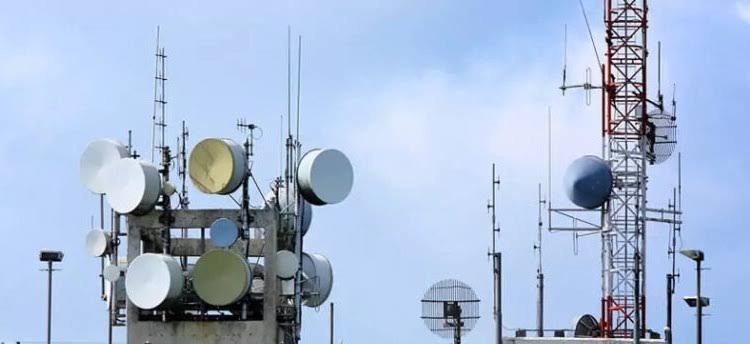
As digital technologies continue to evolve globally, the transition from older mobile networks to faster and more efficient systems such as 4G and 5G has become inevitable.
Countries across America, Europe, and parts of Asia have already begun phasing out 2G and 3G networks to free up spectrum and improve connectivity however, for Zimbabwe the transition is not as straightforward.
Spectrum is a finite resource that is safeguarded by national telecommunications regulators and must be strategically allocated for the benefit of citizens.
Licensing and deployment also come at significant costs, often running into millions of dollars.
Recent sector data shows continued investment in newer technologies.
A total of 67 additional 5G base stations were deployed during the quarter under review, bringing the total to 319. In the same period, 125 LTE (4G) base stations and 76 3G base stations were also deployed.
Currently, Zimbabwe has 319 operational 5G base stations, while 4G infrastructure continues to expand. However, a large portion of the population, particularly in rural and marginalised areas, still relies on 2G and 3G networks using basic or older smartphones.
According to the latest sector performance report by the Postal and Telecommunications Regulatory Authority of Zimbabwe (POTRAZ), the majority of the country’s 16,432,685 active mobile subscriptions still depend on 2G and 3G devices, limiting the ability to refarm lower-frequency spectrum.
Technically, 2G networks operate mainly on the 900 MHz and 1800 MHz bands (or 850 MHz and 1900 MHz in the Americas, using GSM technology. 3G networks (UMTS/WCDMA) typically use the 2100 MHz band, with 900 MHz and 850 MHz supporting rural coverage.
In contrast, 4G networks operate across several bands, including 850 MHz, 900 MHz, 1800 MHz, and 1900 MHz, offering improved speed and efficiency.
5G represents a significant leap, operating across Frequency Range 1 (FR1/Sub-6 GHz), which spans 410 MHz to 7.125 GHz, and Frequency Range 2 (FR2/mmWave), which ranges from 24.25 GHz to 71 GHz. While low- and mid-band frequencies offer broader coverage, high-band frequencies deliver ultra-fast speeds but over shorter distances.
According to POTRAZ, internet penetration in Zimbabwe is now above 80%, largely driven by mobile data.
While 4G usage is growing rapidly and accounts for a significant share of mobile internet traffic, millions of subscribers still rely on 2G and 3G networks, particularly for voice services and basic connectivity.
Zimbabwe’s mobile telecommunications sector is dominated by three major operators: Econet Wireless, NetOne, and Telecel.
Econet Wireless, the largest provider, has the widest coverage and leads in 3G, 4G, and LTE deployment, particularly in urban areas. The company has also begun limited 5G rollout in select locations.
NetOne, the state-owned operator, provides extensive national coverage, especially in rural areas, but still relies heavily on 2G and 3G infrastructure, although it is gradually expanding its 4G network.
Telecel, on the other hand, has experienced a decline in recent years, with more limited coverage and slower investment in next-generation technologies.
Despite ongoing progress, 2G and 3G networks remain the backbone of connectivity, particularly in rural and low-income communities.
A major barrier to switching off legacy networks is the type of devices people use.
A significant portion of Zimbabweans still rely on basic or feature phones, many of which only support 2G or 3G connectivity.
Although smartphone penetration is steadily increasing, affordability remains a major challenge.
A gradual phase-out of 2G and 3G networks is possible and may be beneficial in the long term, provided smartphones become more affordable and 4G and 5G coverage continues to expand.
For now, however, switching off 2G and 3G networks would risk disconnecting millions of users, excluding rural communities, widening the digital divide, and disrupting essential services that depend on basic connectivity.
While the global trend is clearly moving toward shutting down legacy networks, Zimbabwe is not yet in a position to follow suit without significant consequences.
For the foreseeable future, 2G and 3G networks will remain a vital part of the country’s telecommunications landscape.











Comments