

 By
By 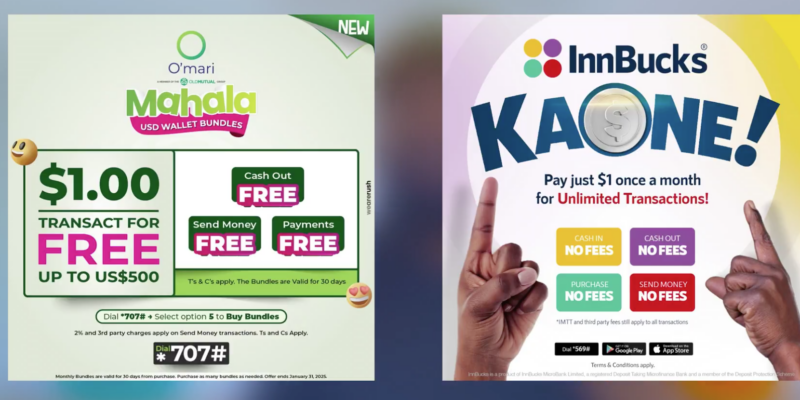
The recent decision by InnBucks to officially discontinue its KaOne monthly subscription model has left a segment of heavy digital wallet users mourning the loss of the popular $1 deal. However, the market shift has raised a critical question regarding fintech strategy in Zimbabwe: Did the subscription model itself fail, or was it simply a casualty of poor implementation?
The answer may lie with competitor O’mari, whose Mahala bundle offers an identical solution but with a fundamentally different execution, one that many disgruntled users and everyday consumers are only just beginning to discover.
Implemented in mid-2024, InnBucks’ KaOne (Ka1) model charged users an automatic $1 subscription fee on their first transaction of each month. In exchange, users enjoyed zero-fee sending and purchasing. Later that year, the platform added a 1% cash withdrawal fee on top of the base subscription.
For high-volume users, paying a single dollar for unlimited monthly transactions was an unmatched bargain. However, for casual users who barely utilised the platform, the mandatory $1 deduction felt like an unfair penalty. Following sustained customer dissatisfaction, InnBucks scrapped the model, returning to standard per-transaction fees.
While some high-volume users feel stranded by the end of KaOne, Old Mutual’s fintech subsidiary, O’mari, continues to quietly run its Mahala bundle. The mechanics are virtually identical to what InnBucks attempted: users pay a flat monthly subscription of $1 to get zero-fee transactions, including sending money, cashing out, and merchant payments up to a monthly limit of $500. As required by law, the standard 2% Intermediated Money Transfer Tax (IMTT) still applies.
The defining difference, however, lies in choice. Unlike InnBucks, which imposed the subscription universally, O’mari’s Mahala bundle is strictly optional. Heavy transactors can actively choose to purchase the bundle to capitalize on massive fee savings, while low-volume users can seamlessly remain on the standard pay-per-transaction model.
O’mari’s opt-in blueprint creates a win-win ecosystem for both types of consumers.












Comments