

 By
By 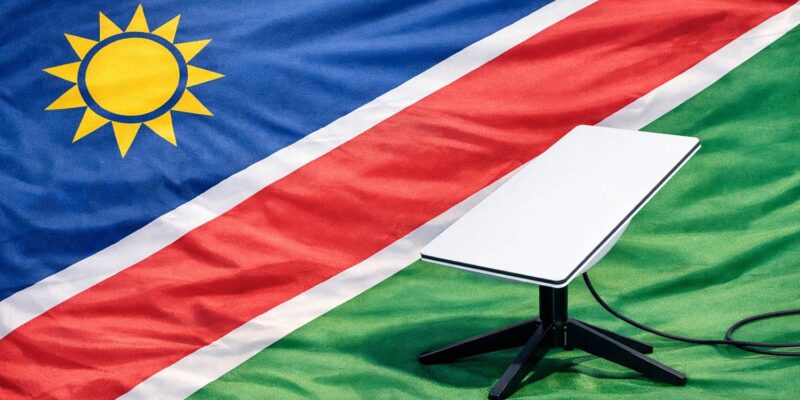
Namibia has become the latest Southern African country to deny entry to Elon Musk’s Starlink. The Communications Regulatory Authority of Namibia (CRAN) rejected the satellite internet company’s applications for radio spectrum and a telecommunications service licence.
The decision, announced on Monday, 23 March 2026, means Namibia now joins South Africa and Angola as the only three countries in the Southern African region that have not permitted the service to launch. Over the past several years, Starlink has secured approvals in Eswatini, Lesotho, Madagascar, Malawi, Mozambique, Zambia, and Zimbabwe.
CRAN stated that it had resolved to decline both applications, effectively blocking the company’s planned nationwide rollout of satellite internet services in 2026.
Prof. Tulimevava Kaunapawa Mufeti, chairperson of CRAN’s board, outlined the reasons behind the rejection, noting that Starlink had failed to meet critical regulatory requirements.
“The applicant met only three of the six criteria,” Mufeti said, emphasising that failure to meet even a single requirement is sufficient grounds for rejection.
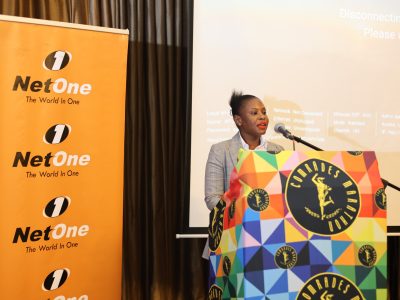
Speaking alongside Minister of Information and Communications Technology Emma Theofelus, Prof. Mufeti explained that the absence of Namibian ownership in the American company significantly influenced the decision. She added that Starlink also failed to meet national security criteria and had previously disregarded Namibian law by offering telecommunications services without the requisite licensing.
CRAN had issued a cease-and-desist order to Starlink in November 2024 after determining that the company’s roaming service was operating in the country without proper authorisation.
Starlink has not yet applied for licences to operate in South Africa, where households and businesses have been using its regional and international roaming services unlawfully for several years. Users typically order Starlink kits in neighbouring countries with official service and import the equipment across the border.
The company is awaiting regulatory changes from the Independent Communications Authority of South Africa (Icasa) to recognise Equity Equivalent Investment Programmes in telecoms licensing. Such a mechanism would allow Starlink to launch with a monetary investment contributing to transformation, rather than establishing a local subsidiary with 30% ownership by historically disadvantaged individuals.
Alternatively, Starlink could resell its services through a local company already meeting ownership requirements, though this would likely increase consumer prices. The company generally prefers offering residential services directly to customers to maintain control over billing and user support.
Starlink may seek reconsideration of CRAN’s decision within 90 days under Namibia’s Communications Act. Meanwhile, the company has made it increasingly difficult to use its roaming service as a permanent broadband solution in South Africa, cutting off access after 60 days of continuous use.
While some users previously restored service by visiting the country where their kit was registered, that workaround is no longer effective. A few have resorted to rotating two kits between South Africa and the country of origin every two months, though this remains an expensive and impractical solution.











Comments