

 By
By 
Following the US Federal Communications Commission’s (FCC) approval on September 17, 2026, granting SpaceX permission to offer global mobile roaming across more than 150 countries, Zimbabwe has emerged as a primary focus for satellite-to-mobile connectivity in Southern Africa.
Having already secured operational approval from the Postal and Telecommunications Regulatory Authority of Zimbabwe (POTRAZ), the country is uniquely positioned to benefit from Starlink Mobile, SpaceX’s rebranded Direct-to-Cell satellite service.
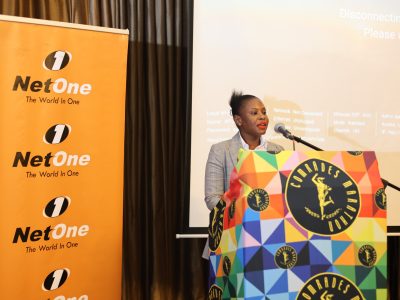
In Zimbabwe, where roughly 67% of the population resides in rural regions underserved by terrestrial base stations, satellite-to-mobile integration presents a transformative opportunity. Econet Wireless and NetOne represent the most viable local telecom partners to enter a direct-to-cell spectrum partnership with SpaceX.
While neighboring South Africa remains noticeably absent from Starlink’s rollout plans due to strict local ownership regulations enforced by ICASA, Zimbabwe is among 29 African nations included in SpaceX’s direct-to-cell regulatory roadmap.
Unlike conventional satellite internet that relies on fixed ground dishes and specialized hardware, Starlink Mobile utilizes Low-Earth Orbit (LEO) satellites equipped with advanced eNodeB LTE payloads. These orbital units function essentially as cell towers in space, transmitting 4G LTE signals directly to standard smartphones without requiring specialized apps or hardware modifications.
To route voice, text, and data directly to handsets, SpaceX must integrate with terrestrial Mobile Network Operators (MNOs) that hold local LTE spectrum rights in the 1.6 to 2.7 GHz range.
With Starlink hardware already being distributed locally through authorized entities such as IMC Communications and TelOne, a cellular spectrum alliance with Econet or NetOne would allow Zimbabwean subscribers to automatically roam onto Starlink’s satellite network whenever they travel beyond traditional tower reach.
The main catalyst on the continent has been SpaceX’s flagship partnership with Airtel Africa, which spans 14 markets. Following initial technology pilots in Kenya in March 2026, Airtel and SpaceX officially launched commercial Starlink Mobile service in the Democratic Republic of Congo on August 14, 2026, closely followed by a commercial rollout in Uganda on September 24, 2026.
These launches demonstrate how direct-to-cell tech allows operators to eliminate dead zones without the heavy capital expense of building remote physical towers.
While South Africa remains sidelined by rules mandating 30% ownership by historically disadvantaged groups, Zimbabwe stands alongside regional neighbors Botswana, Eswatini, Lesotho, Mozambique, and Namibia on Starlink’s mobile footprint.
As SpaceX continues deploying its second-generation satellite constellation, Zimbabwean phone users are moving closer to complete, seamless mobile coverage across the nation’s most remote agricultural, mining, and border communities.











Comments