

 By
By 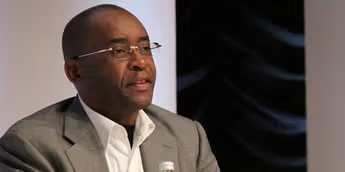
Zimbabwean billionaire and tech entrepreneur Strive Masiyiwa has announced an ambitious multi billion dollar project to build what he calls the country’s first AI powered tech city, a futuristic hub expected to transform Zimbabwe into a regional centre for digital innovation, advanced manufacturing, and cryptocurrency development.
The project which is already in its initial planning and land acquisition phase, will be located on the outskirts of Harare and is designed to host AI factories, blockchain development centres, high tech training institutions, and modern residential districts.
Masiyiwa’s team says the city will attract global and African start ups, create thousands of jobs, and strengthen Zimbabwe’s position in the continent’s emerging digital economy.
“This will be a city built for the future for data scientists, coders, creators and entrepreneurs who want to build world class technologies right here at home,” Masiyiwa said during a virtual briefing on Monday. “Zimbabwe has the talent. What we need now is the infrastructure that supports bold ideas.”
Government officials have welcomed the project, describing it as a “game-changing private sector investment” that aligns with national goals to digitalise the economy and improve employment opportunities for young people.
The Ministry of ICT said discussions are underway to fast track regulatory support, including special economic zone status for the venture.
Economic analysts say the project could boost investor confidence in Zimbabwe’s tech sector at a time when the country is seeking to diversify beyond mining and agriculture.
However, they also warn that stable power supply, currency consistency and supportive policy reforms will be critical to the city’s success.
Masiyiwa’s announcement has been met with widespread excitement on social media, with many young tech enthusiasts describing the development as the “Silicon Valley dream coming to Zimbabwe.”
Groundbreaking for the project is expected later this year, with the first phase scheduled for completion in 2027.












Comments