

 By
By 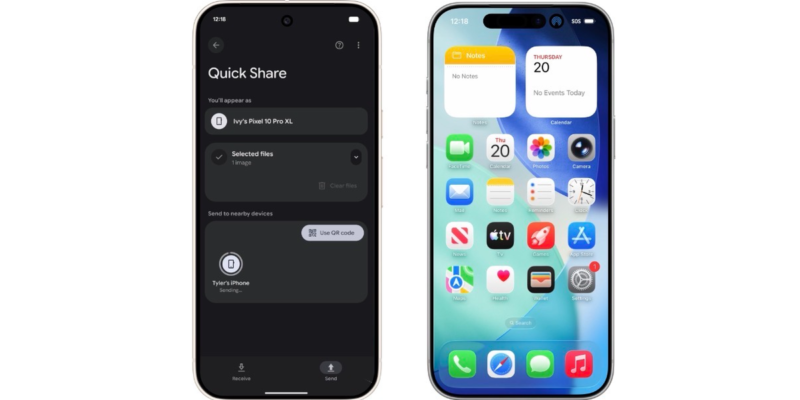
Google recently announced that its Android file-sharing service, Quick Share, now supports direct transfers to and from Apple iPhones. This development promises to simplify a common frustration for users of different mobile ecosystems, particularly in social settings where sharing high-quality media has been notoriously difficult.
The new functionality addresses a widespread issue, the degradation of photo and video quality when shared across platforms via popular messaging applications. Previously, iPhone users could seamlessly share original-quality files with other Apple devices using AirDrop, while Android users were often forced to rely on third-party apps or data-intensive cloud services.
The most common workaround, using applications like WhatsApp, results in significant compression, diminishing the quality of the media.
Google’s solution is integrated directly into the operating system, requiring no additional applications from either sender or receiver. When activated, Quick Share will detect nearby iPhones in the share menu, and iPhones will similarly list compatible Android devices as available AirDrop targets. The transfer establishes a secure, peer-to-peer connection utilising both Bluetooth and Wi-Fi Direct, ensuring speed and security without consuming mobile data, a critical consideration in markets with expensive or limited data plans.
However, initial access to this feature is highly restricted. At launch, cross-platform compatibility is exclusively available on Google’s latest flagship devices, the Pixel 10 series. The company stated in its announcement that it looks forward to expanding availability to more Android devices but provided no specific timeline. This restriction means the vast majority of Android users, including those with popular budget and mid-range devices, cannot yet utilise the functionality.
Quick Share itself resulted from a 2024 collaboration between Google and Samsung, merging the latter’s proprietary sharing tool with Google’s Nearby Share to create a unified standard for Android. This latest expansion to include iOS represents the next logical step in reducing digital barriers between competing platforms, though its full impact remains dependent on widespread device support beyond current premium offerings.









Comments