

 By
By 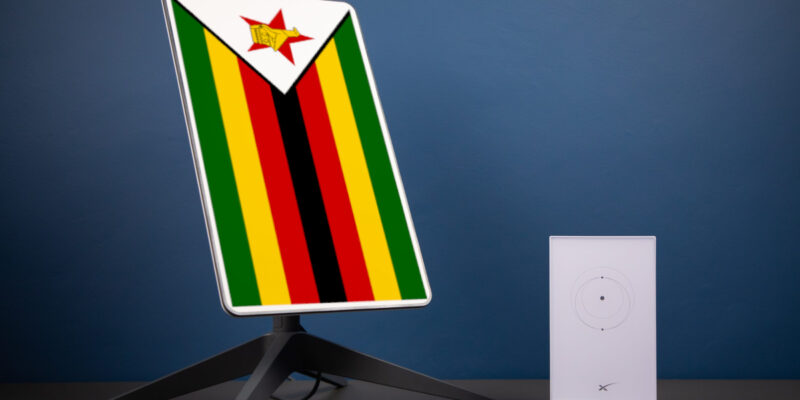
SpaceX’s satellite internet service, Starlink, is rapidly transforming Zimbabwe’s telecommunications landscape and is on the brink of becoming the nation’s dominant fixed internet provider.
Latest quarterly figures from the Postal and Telecommunications Regulatory Authority of Zimbabwe (POTRAZ) highlight a massive shift in consumer connectivity, with fixed broadband subscriptions surging from 286,271 in the third quarter of 2024 to 417,892 by the first quarter of 2026.
Satellite broadband accounted for over 53% of all new gross sign-ups during this window, proving to be the primary catalyst behind the country’s digital expansion.
Between Q3 2024 and Q1 2026, satellite internet subscribers in Zimbabwe skyrocketed by an astounding 2,167%, escalating from a modest 3,814 users to 86,488.
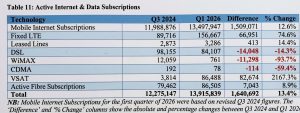
This dramatic rise pushed satellite technology past traditional Digital Subscriber Line (DSL) connections, which fell 14.3% to 84,107 subscribers. Satellite is now just 17 users short of overtaking active fibre connections, which grew by only 8.9% to 86,505 over the same timeframe.
While Fixed LTE also recorded significant growth, expanding 74.6% to reach 156,667 users, legacy platforms like WiMAX and CDMA plummeted into near extinction. Industry experts attribute the vast majority of satellite gains directly to Starlink’s entrance into the market.
The rapid adoption of Starlink stems directly from its disruption of Zimbabwe’s historically prohibitive data pricing. Before Starlink’s official launch in September 2024, uncapped fibre services cost around $150 per month, placing fixed internet out of reach for most citizens. By introducing high-speed uncapped packages offering speeds over 100Mbps starting at $30 per month, Starlink triggered widespread price competition, forcing local incumbent providers such as Liquid Home to slash their rates.
Consequently, Zimbabwe’s standing on global fixed internet affordability indexes improved dramatically, drastically reducing the labor hours required for an average worker to afford a monthly broadband subscription.
Consumer enthusiasm was so overwhelming that Starlink was forced to temporarily freeze new subscriptions in major urban centers like Harare and Bulawayo between November 2024 and February 2026 while expanding its satellite fleet capacity.
Independent technology consultants project that Zimbabwe is set to become Africa’s largest Starlink market by the second quarter of 2026, overtaking Nigeria’s 98,642 users and boasting more subscribers than any European nation.
To sustain this momentum, experts are urging further infrastructure developments, including localized points of presence and ground stations, to minimize latency and optimize network performance nationwide.











Comments