

 By
By 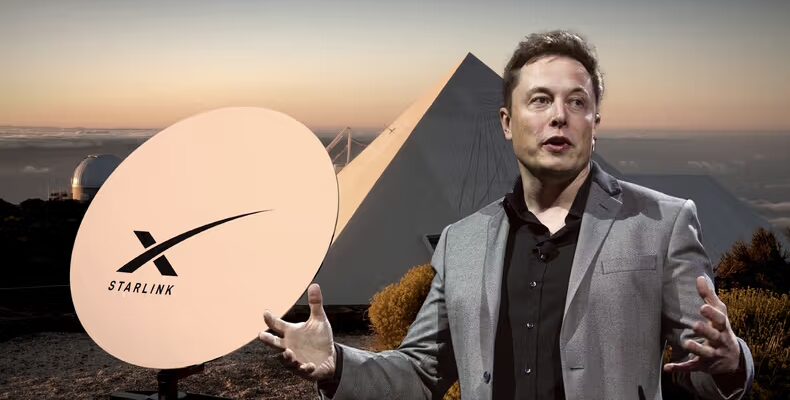
Elon Musk has made a explosive allegation against South Africa, claiming that his satellite internet company, Starlink, was repeatedly offered the opportunity to bribe its way to a telecommunications license by pretending a black person ran the local entity.
In a post on X on Sunday, Musk again argued that the main reason Starlink could not launch in his birth country was that he was not black.
“South Africa won’t allow Starlink to be licensed, even though I was born there, simply because I am not black,” Musk said.
“We were offered many times the opportunity to bribe our way to a license by pretending that a black guy runs Starlink SA, but I have refused to do so on principle,” he said.
“They should be shown no respect whatsoever anywhere in the world and shunned for being unashamedly racist!”
Musk’s statements came shortly after he responded to another post by Department of International Relations and Cooperation public diplomacy head Clayson Monyela, who had taunted Musk by comparing him to a small child unimpressed with a birthday ice cream at a Spur restaurant.
Musk said Monyela should “stop being such a f—ing racist, you a–hole.” Another commentator Michael de Villiers called Musk a blatant liar over his claims.
“There are over 500 American companies operating in South Africa, many of them led by white executives,” de Villiers said. “This isn’t about facts, it’s about smearing South Africa for your own benefit.”
While Musk has frequently spoken out against South Africa’s black economic empowerment laws, Starlink’s regulatory team has formally and repeatedly maintained that it supports the policy. However, it argues that the Independent Communications Authority of South Africa’s (ICASA) regulations currently do not align with broad-based black economic empowerment (B-BBEE).
Starlink has even launched a dedicated web page to address what it calls myths about its planned operations. The company wants to use Equity Equivalent Investment Programmes (EEIPs) which require a company to invest 25% of its local operations’ value annually into transformation projects rather than the 30% local ownership rule.
“Starlink supports South Africa’s transformation objectives and proposes to meet them through Equity EEIPs, a lawful and well-established B-BBEE mechanism,” the company said. “EEIPs are explicitly recognised in the ICT Sector Code and in multiple other B-BBEE sector codes. However, the Icasa licensing regulations are anomalous and don’t recognise EEIPs.”
Communications minister Solly Malatsi has directed ICASA to incorporate EEIPs into its licensing regulations following a public consultation where roughly 90% of 15,000 substantive submissions supported the mechanism.
For now, Starlink remains unlicensed in South Africa, and Musk’s incendiary claims have further inflamed an already tense standoff between the billionaire and his country of birth.


Comments