

 By
By 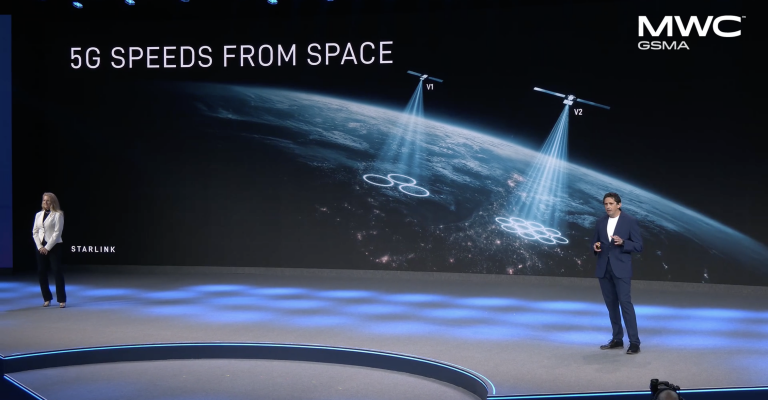
SpaceX has officially entered a new chapter in its mission to eliminate cellular dead zones, rebranding its Direct to Cell technology as Starlink Mobile. The announcement, made during the Mobile World Congress, comes with an ambitious roadmap to scale the service from its current user base to millions of devices worldwide via a revolutionary second-generation satellite constellation.
The rebranding follows a strategic trademark filing last year and signals a shift from experimental connectivity to a mass-market broadband solution. Michael Nicolls, SpaceX’s Vice President for Satellite Engineering, highlighted the scale of the company’s vision on social media and during his keynote address.
“The second-generation Starlink Mobile system will be epic broadband connectivity to hundreds of millions of phones globally,” Nicolls tweeted, later clarifying in his speech that the company aims to serve “hundreds of millions, potentially more, devices.”
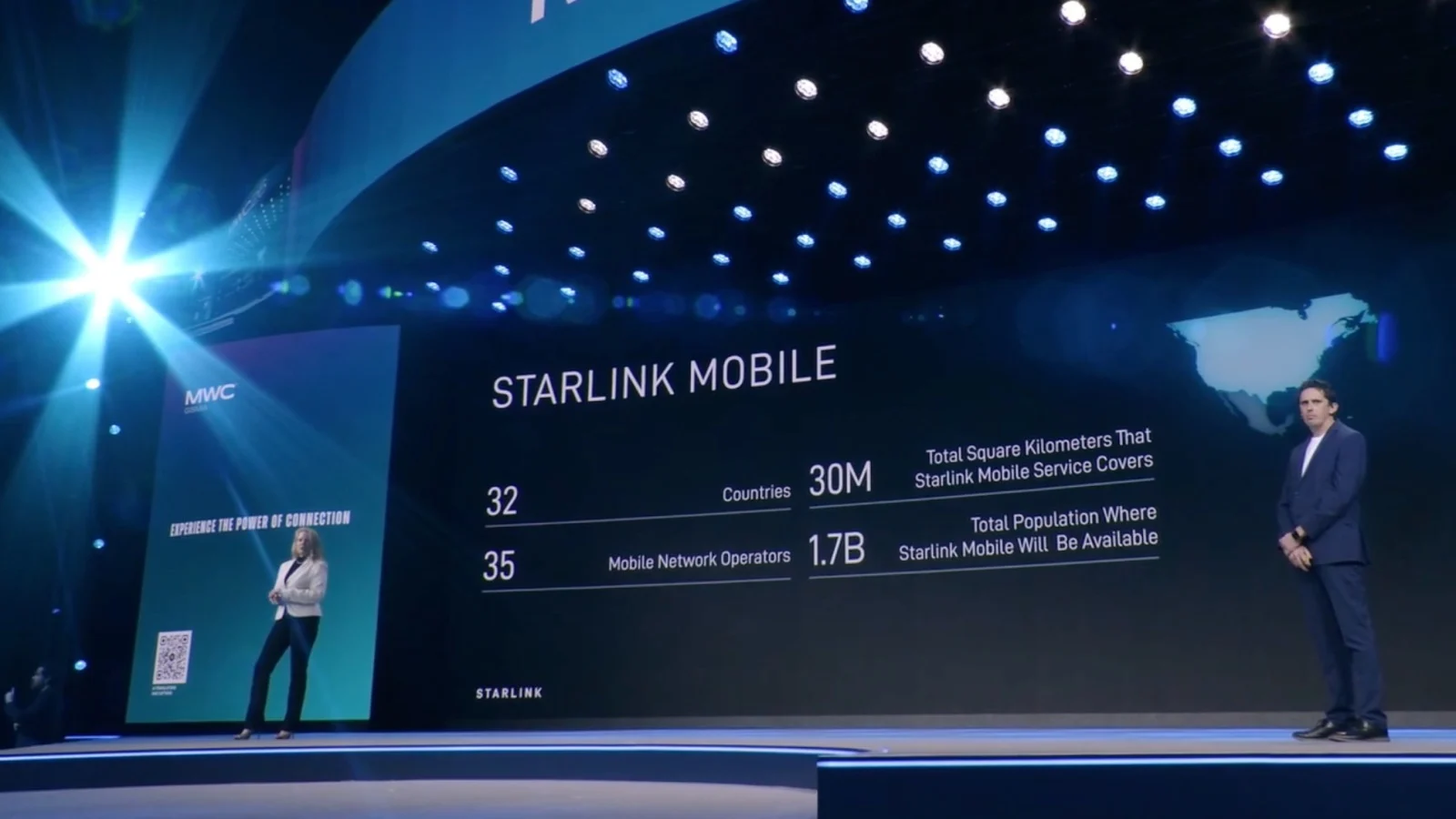
Credit: MWC
The current first-generation system is already a formidable force in the telecommunications sector. It currently comprises 650 satellites and has connected over 16 million unique users, according to Nicolls. Through high-profile partnerships with carriers such as T-Mobile in the United States, Rogers in Canada, and KDDI in Japan, the system maintains 10 million monthly active users. SpaceX anticipates rapid growth in the near term, with Nicolls adding,
“We expect that number to exceed 25 million by the end of 2026.”
The transition to the second-generation system relies heavily on the success of SpaceX’s Starship vehicle. By utilising the massive lift capacity of the upcoming rocket, the company plans to deploy its upgraded constellation with unprecedented speed.
“We’ll be able to launch more than 50 satellites on every Starship launch, and we’ll begin launching in mid-2027,” Nicolls revealed.
This accelerated timeline is intended to bridge the gap between regional service and total planetary reach.
“With Starship, we’ll be able to deploy the constellation very quickly. Our goal is to deploy a constellation capable of providing global and continuous coverage within six months. And that’s roughly 1,200 satellites.”
While the existing Starlink Mobile version can facilitate text messaging, select applications, and even video calls in remote areas, it currently operates under bandwidth limitations, with speeds estimated at roughly 4Mbps. To evolve into a true broadband provider, SpaceX is aggressively pursuing more radio spectrum.
Last year, the company struck a significant deal to acquire spectrum from EchoStar, the parent company of Boost Mobile. This acquisition, set to officially close on November 30, 2027, will provide the necessary frequencies to boost performance. However, hardware adoption remains a factor; Elon Musk previously indicated a two-year timeframe for smartphone manufacturers to integrate the specialised chips required to utilize the EchoStar spectrum.
By leveraging orbiting satellites instead of terrestrial towers, Nicolls noted that Starlink Mobile already claims the “largest 4G coverage by geographic area in the world.”











Comments