

 By
By 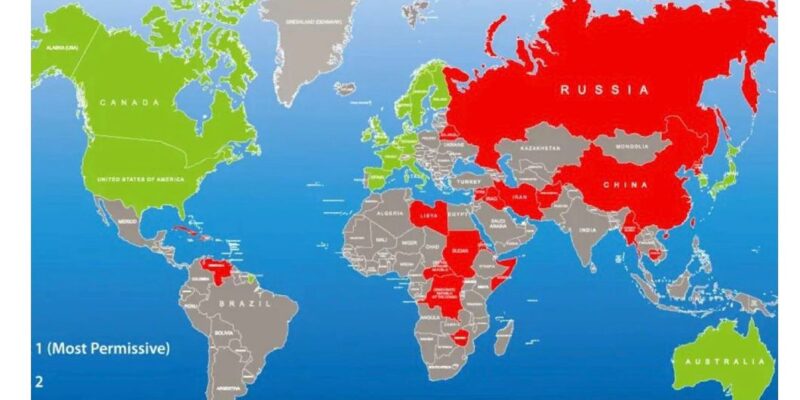
Zimbabwe’s ambitions in artificial intelligence are facing a quiet but significant challenge, shaped not by a lack of ideas or talent, but by global geopolitics and access to computing power. Under the United States’ three-tier AI chip export framework introduced during the Biden administration, Zimbabwe falls into Tier 3 — a category that completely restricts access to advanced GPUs such as Nvidia’s H100 and A100 chips. These processors are the backbone of modern AI development, powering everything from large language models to advanced computer vision systems. Their absence places Zimbabwe at the margins of the global AI race.
The restrictions are part of a broader U.S. strategy to retain technological dominance and limit the spread of powerful AI capabilities to regions deemed geopolitically sensitive. For Zimbabwe, the implications are far-reaching. Local developers, researchers, and institutions are effectively locked out of state-of-the-art AI hardware, forced to rely on foreign AI systems and cloud-based solutions, and excluded from key global AI research and development pipelines. Over time, this creates a structural dependency that weakens local innovation and bargaining power in an increasingly AI-driven global economy.
Even without export controls, the economics of advanced AI infrastructure present an almost insurmountable barrier. A single Nvidia H100 GPU costs around US$31,000, while high-end systems like Nvidia’s NVLink GB200 platforms run into millions of dollars. At the extreme end, xAI’s Colossus cluster reportedly uses around 200,000 H100 GPUs, representing hardware costs exceeding US$7 billion as of 2025. Future AI supercomputers are projected to cost upwards of US$200 billion and consume power equivalent to multiple nuclear reactors. For a country like Zimbabwe, where infrastructure budgets are already under pressure and technical capacity is still developing, such investments are simply unrealistic.
However, the absence of cutting-edge GPUs does not automatically disqualify Zimbabwe from building meaningful, competitive AI systems. What it does require is a strategic shift away from brute-force computing and toward efficiency-driven innovation. Instead of chasing expensive supercomputers, Zimbabwe has an opportunity to focus on alternative AI approaches that are better suited to low-resource environments. Techniques such as parameter-efficient fine-tuning allow models to be adapted using minimal compute, making it possible to customize existing models for local use cases without retraining them from scratch. Model merging offers another powerful pathway, enabling developers to combine multiple fine-tuned models into hybrid systems with new capabilities, often without additional training costs.
Hardware-agnostic and hardware-in-the-loop model designs also present a viable path forward. Emerging architectures such as mamba-based models, low-bit precision models, and efficient inference techniques reduce reliance on high-end GPUs. Heterogeneous inference strategies go even further, allowing AI workloads to run across a mix of CPUs, consumer-grade hardware, Apple Silicon, and even gaming consoles. In parallel, decentralized training approaches — where models are trained collaboratively across distributed networks of consumer devices — open the door to community-driven AI development that does not depend on centralized data centers.
These approaches align well with Zimbabwe’s realities and strengths. The country has a growing pool of tech-savvy youth, universities with emerging research capacity, and an increasing appetite for open-source collaboration. What is missing is deliberate investment and policy direction. Without funding for local research labs focused on low-cost AI innovation, and without incentives for startups and universities to experiment with efficient AI techniques, Zimbabwe risks becoming a passive consumer of foreign AI systems. This dependency also carries cultural costs, including the underrepresentation of local languages, contexts, and values in global AI models.
To change course, Zimbabwe must prioritize AI sovereignty through smart, targeted investment. Supporting peer-to-peer learning communities, open-source ecosystems, and applied research in efficient AI can help build systems that are locally relevant and globally competitive. The goal is not to replicate Silicon Valley’s infrastructure, but to pioneer a different model — one rooted in efficiency, decentralization, and inclusion.
Zimbabwe’s path into the AI future will not be defined by million-dollar GPUs or massive data centres. It will be defined by how well the country masters doing more with less, turning constraints into catalysts for innovation, and building AI systems that reflect and serve its own people while remaining connected to the global digital economy.











Comments