

 By
By 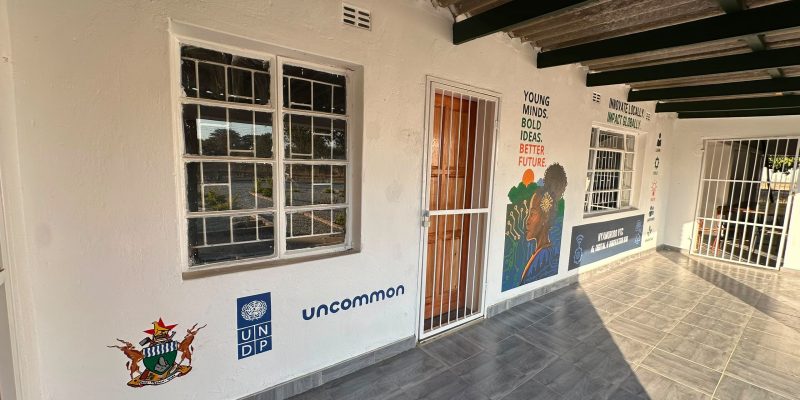
By Ross Moyo
The UNDP has partnered the Zimbabwe government through the ministry of youth and ICT postal and couriers services to launch the first ever uncommon AI, Digital and Innovation Hub in Gokwe, Nyamuroro.
The first ever rural, Vocational Training Centre (VTC) a government-based digital hub anchored at Nyamuroro, is directly bridging the technology gap between Harare and underserved rural communities by providing free access to digital learning, practical skills development, innovation opportunities and pathways to entrepreneurship and decent work.
The project is a strategic partnership between the Ministry of Youth, UNDP Zimbabwe and Uncommon — with support from the Ministry of Information Communication Technology, Postal and Courier Services; Ministry of Primary and Secondary Education; and Ministry of Skills Audit and Development.
AT A GLANCE — THE NUMBERS:
50 YOUTHS to be enrolled for a free one-year intensive digital skills bootcamp and employability support, with training starting September 2026.
3,000 primary and secondary school learners targeted through coding outreach and after-school coding classes.
300 teachers targeted for vocational and digital capacity building.
100% commitment to inclusion and participation across programme delivery, prioritising women, girls, persons with disabilities, schools and underserved groups.
The hub is fully equipped as a solar-powered facility with high-speed Starlink connectivity, modern devices, laptops, furniture and a creative, youth-friendly environment designed to overcome rural barriers of devices and reliable connectivity.
The intervention directly contributes to Zimbabwe Vision 2030, National Development Strategy 2 (NDS2), the National AI Strategy, the National Youth Empowerment Strategy, Agenda 2063 and Sustainable Development Goals 4 (Quality Education), 5 (Gender Equality), 8 (Decent Work) and 10 (Reduced Inequalities).
WHAT IT WILL DELIVER:
1. Market-relevant skills: Software Engineering, Product Design, Digital Marketing and Entrepreneurship
2. Early digital foundations: Free after-school coding for learners and capacity building for teachers
3. Transition to opportunity: Structured mentorship, internships, employment networks and start-up support
4. Local sustainability: Training local staff, quality assurance and integration within a government VTC model that can be replicated to other VTCs.
According to the partnership framework, the model creates a credible platform for investment, measurable results and future expansion to other VTC centres across Zimbabwe.
Partners are calling for more collaborators in connectivity, devices, software, solar resilience, assistive technology, mentors, internships and funding to expand learning and job pathways.








Comments