

 By
By 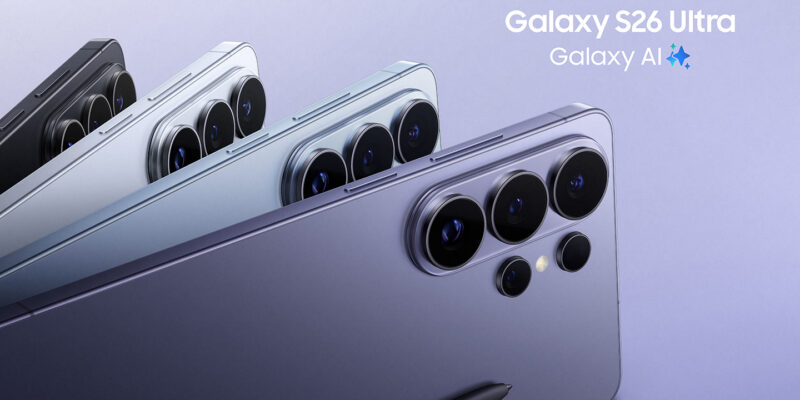
Samsung Electronics Co. pulled the curtain back on its Galaxy S26 flagship series Wednesday, signaling a pivot in its rivalry with Apple Inc. by prioritizing sophisticated software and real-world privacy over radical aesthetic shifts.
The new lineup, the high-end Galaxy S26 Ultra ($1,300), the Plus ($1,100), and the standard S26 ($900), positions Samsung’s premium tier against the iPhone 17. While the Ultra’s price remains steady, the base and Plus models have climbed by $100, a move likely prompted by the tightening global memory chip market. Pre-orders begin immediately ahead of an March 11 retail launch.
The most striking hardware departure belongs to the Ultra, a native Privacy Display. By selectively disabling pixels that contribute to off-angle viewing, the 6.9-inch screen becomes virtually unreadable from the sides. This built-in solution allows users to ditch third-party screen protectors, preserving the phone’s industry-leading anti-reflective properties while shielding sensitive apps like banking or Slack from prying eyes.
In a reversal of recent trends, Samsung has swapped titanium for a specialized aluminum. This change allows the S26 Ultra to claim the title of the company’s thinnest and lightest iteration yet. Internally, the Ultra boasts a beefed-up vapor chamber for cooling and 65-watt wired charging hitting a 75% battery mark in just 30 minutes.
Under the hood, all three models utilize Qualcomm’s Snapdragon 8 Elite Gen 5 chip to power an ambitious AI suite. Samsung is embracing a multi-agent philosophy, integrating Perplexity AI alongside Google’s Gemini.
Users can summon a dedicated agent with “Hey Plex” for deep system tasks and real-time web answers. Google Gemini also remains the default assistant, now capable of performing automated actions such as hailing an Uber through simple voice commands.
New natural-language image editing allows users to describe desired changes to a photo to have them rendered by generative AI.
Samsung also refreshed its audio lineup with the Galaxy Buds 4 Pro ($249) and Galaxy Buds 4 ($179). Aiming squarely at Apple’s AirPods Pro 3, the Pro model features deeper bass and high-resolution streaming. Samsung is also playing catch-up on convenience, adding head-gesture controls (for nodding or shaking to handle calls) and automatic speech detection.
By leaning into software tricks like the Plus and S26’s new horizontal lock video stabilization, Samsung is testing whether intelligence can outperform aesthetics.
It is a calculated risk in a market where consumers often wait for a new look before upgrading, but one that could redefine the smartphone as a truly private, proactive assistant.









Comments