

 By
By 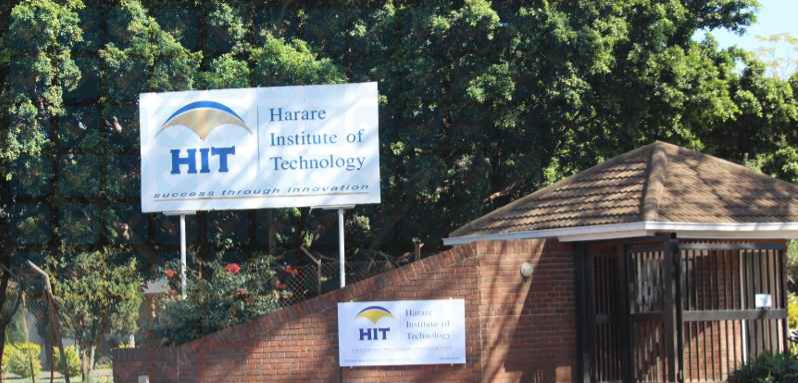
Plans to develop one of Zimbabwe’s largest technology driven urban projects have moved forward, with the Harare Institute of Technology (HIT) set to spearhead the construction of a multi million dollar integrated smart city and innovation hub in Belvedere.
The project known as the Hi-Tech Development Valley, will sit on 194 hectares near HIT and is expected to become a flagship smart city that combines residential, commercial, industrial and academic facilities within a technology enabled, sustainable urban environment.
HIT is working with Hi-Tech Development Valley Investments (Pvt) Ltd to establish what officials describe as a next generation African innovation precinct aligned with Zimbabwe’s Education 5.0 model and the national goal of achieving an upper middle income economy by 2030.
The institution has issued a call for expressions of interest from firms with expertise in large scale urban development, smart infrastructure, science and technology parks, or integrated township projects.
Prospective partners are expected to contribute to master planning, engineering, financing and operations under public-private partnerships or joint venture models.
According to HIT, the smart city will draw inspiration from global innovation centres such as Silicon Valley, Konza Technopolis, Hong Kong Science Park and Shenzhen Industrial Park, while being adapted to Zimbabwe’s regulatory and development environment.
Key features of the project include 320 high end residential properties, a 2 000 bed student residence, a 300 bed luxury hotel, and a 5 400 seater conference centre. The development will also house a Science and Technology Park and an industrial park focused on high tech manufacturing and research in fields such as artificial intelligence, robotics, biotechnology, semiconductors, aerospace and clean energy.
The innovation precinct will incorporate incubation centres, R&D laboratories, data centres and university industry partnership zones designed to support start ups, research commercialisation and advanced training.
Plans also include seven multi storey faculty buildings with modern teaching and laboratory facilities, a 520 bed specialist teaching hospital, and a six floor shopping mall with over 4 000 parking bays.
Infrastructure investments will cover smart water and sewer systems, storm drainage, internal road networks, pedestrian and cycle paths, LED street lighting, digital connectivity and energy systems anchored by a 36 megawatt solar farm to supply sustainable power to the precinct and the national grid.
Recreation facilities such as an 18 hole championship golf course, sports complex, swimming pool, running tracks, adventure parks and a wildlife conservation park are also planned as part of the integrated design.
HIT says the smart city will drive industrialisation, technology transfer and investment in high tech sectors while creating an ecosystem that links industry, academia and government.
The Hi-Tech Development Valley is being positioned as a major component of Zimbabwe’s long term innovation and industrial growth strategy.












Comments