

 By
By 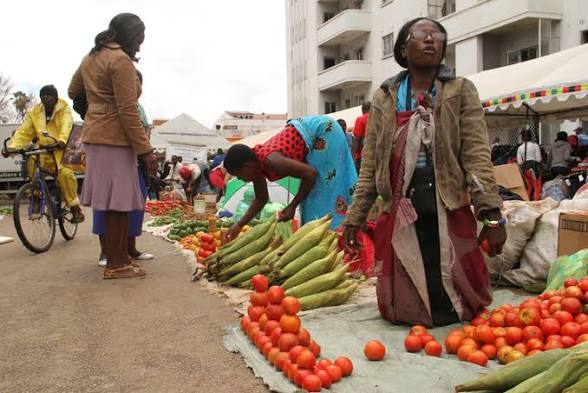
By Ross Moyo
Government has drawn a line in the sand for Zimbabwe’s street vendors, but labour and rights groups say it is punishing poverty instead of fixing it.
Local Government Minister Daniel Garwe issued a 7-day ultimatum on 2 September ordering all vendors at “undesignated trading sites” to vacate by Wednesday, 9 September 2026. After that, municipal police will dismantle stalls in Harare CBD, Harare Metro and then nationwide.


The justification: sanitation, congestion, and unfair competition with formal businesses paying taxes.
But with unemployment estimated at 85%, the Zimbabwe Congress of Trade Unions (ZCTU) says vending is not a crime — it’s survival.
ZCTU: “VENDORS ARE HERE TO STAY”
In a statement on 6 September, ZCTU Secretary General Tirivanhu Marimo said the directive was “knee-jerk” and “insensitive”.
“We reiterate that people who are into street vending are not into it for their liking but are being forced due to the unemployment levels largely blamed on bad economic policies,” Marimo said.
“Instead of harassing vendors, the government must first of all restore economic growth and create the promised millions of jobs and by doing so, all vendors will vanish overnight.
“Without that the government and councils must accept the fact that the informal economy, is here to stay and that it has become the biggest employer in the country and therefore it needs to be carefully treated.”
Marimo also accused politicians of double standards: “During election seasons, these hypocrites have been encouraging people to go into ‘self-help’ projects, particularly vending, only declare them an eyesore once elections are over.”
Former Mt Pleasant MP Fadzayi Mahere was blunter: “They manufacture poverty through their looting, corruption and incompetence then punish the people for the chaotic mess that they’ve created.”
GOVT: “NOT ON SUPERMARKET DOORSTEPS”
The government is pushing back with a public health + fairness argument.
Permanent Secretary Nick Mangwana defended the order on X on Sunday, calling it a “complex urban challenge”.


“While street trade is a vital source of income and an integral part of the retail sector globally, cities must balance this with public health and safety,” Mangwana wrote.
“Designated vending zones, equipped with ablution facilities and waste management, offer a practical compromise.
“However, vending must be legal, properly regulated, and conducted only in approved spaces — not on the doorsteps of supermarkets or other formal businesses, as this creates unfair competition and obstruction.”
He added: “The goal is not exclusion but creating sustainable infrastructure that supports commerce while maintaining clean, accessible public spaces for all.”
Garwe said the “zero-tolerance clean-up” is meant to restore order and ease congestion.
THE MIDDLE GROUND: FROM PAVEMENT TO POS
Stand outside any major supermarket in Harare right now. Inside: a business paying rent, VAT, PAYE, and council rates. Outside: 10 vendors selling tomatoes, airtime, and bread. Some pay $1 daily to council. Most don’t.
That image explains the tension. The logic for regulation is sound — you cannot build a tax base if half the retail sector operates outside it. Models used in Kigali, Nairobi, and Durban show designated zones with ablution and waste management can work.
But the data also shows the informal sector is already partially taxed: council vendor licences of $0.50 – $2 per day, ZIMRA Presumptive Tax, and market stall rentals. The problem is leakage, manual collection, and no link to business development.
If government is serious about balance, the solution is tech + infrastructure: Digital Licensing via USSD/EcoCash, Zoned Markets 2.0 with solar and WiFi, supplier linkages to formal wholesalers, and a graduation model to SME loans. This doesn’t kill vending. It moves it off the pavement and into the formal economy.
WHAT HAPPENS NEXT
If demolitions go ahead without designated markets, vendors will simply move to suburbs — making enforcement harder and cutting council revenue. ZCTU and Mahere also warned of political backlash, accusing government of using vending as a “vote buying gimmick” then cracking down post-election. Vendors have already vowed: “We Will Not Go Anywhere.”
The balance government must strike: Regulate and formalize, don’t criminalize.
Digitize licensing, build markets with water and waste management, and link vendors to ZIMRA’s tax system.
The real test after 9 September is not how many stalls are broken. It’s how many vendors are registered, zoned, and brought into the tax and services system. That’s the difference between a clean-up and a crackdown.
Until the economy creates formal jobs, vending will remain Zimbabwe’s default employer. The only question is whether it happens on the pavement, or in the system.












Comments