

 By
By 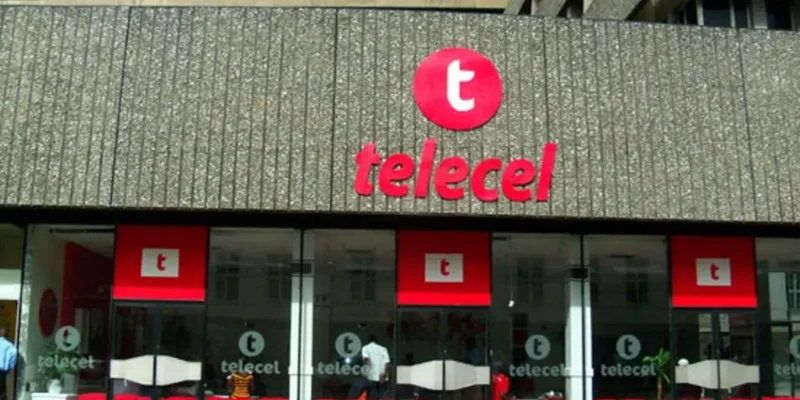
A local investment vehicle, Augustus Capital is snapping up Telecel Zimbabwe for a total USD $175 million under the corporate rescue program, TechnoMag can exclusively reveal.
By Toneo Toneo
This move will see Telecel Zimbabwe partnering with a giant regional telecoms player, a move that will shake up the telecoms landscape in Zimbabwe.
Augustus Capital was established as a special purpose investment vehicle to participate in the restructuring and proposed acquisition
of Telecel Zimbabwe pursuant to the Corporate Rescue Proceedings.
Deal Structure
Mutapa Investment Fund, the sovereign wealth fund, will cede most of its 45% stake in Telecel, retaining just 15%, while Augustus Capital absorbs the remaining 40% held by local consortium Empowerment Corporation.
Funding
The investment Vehicle Secured a capital financing facility with Ecobank of up to
USD127 million, which will be available upon the successful adoption of the Plan to support the implementation of the proposed transaction and the Company’s ongoing operations.
Capitilisation
Sources close to the deal told TechnoMag that Augustus Capital entered into contractual arrangements with ZTE and Satewave Technologies for the supply of network equipment (USD60.5 million) and network rollout services (USD28.5 million), respectively, as part of the acquisition.
The new arrangement will see the Telecel staff returning to work whilst employees continue to be employed by the Company, they will be
entitled to their salaries and other accrued benefits.
Rescue Plan
Once fully approved by preferred creditors, the Corporate Rescue Plan, is legally
binding once its has been secured as stated under Section 144 creditors,(2) to (4concurrent) of the Insolvency
creditors Act and[Chapter members6:07].
A corporate rescue plan is the business proposal for how the financially distressed company is going to be resuscitated. The plan
also includes cash flows demonstrating how the pre-commencement creditors are going to be repaid legacy balances owing as at the
date of commencement of rescue proceedings.
The rescue plan provides a legally binding framework within which Telecel
Zimbabwe is sold and allowed to restructure and realign its operating models in order to optimise performance and continue to
operate on a sustainably profitable basis, post the Adoption Date;it is mandated to
Restructure the legacy debt and re-pay creditors in terms of Augustus Capital‘s bid and a subsequent Implementation Agreement, within a period of approximately twenty-four (24) months with effect from the Adoption Date
Legal Framework
The rescue plan operates under Zimbabwe’s Insolvency Act, with Section 126 imposing a moratorium that shields Telecel from legal action and enforcement proceedings for the duration of the process. Approval requires sign-off from preferred creditors under Section 144 of the Act.
The moratorium imposed by Section 126 (as read with Section 142(2)(b)(i)) of the Insolvency Act prohibits any legal proceedings,
including enforcement action, against Telecel Zimbabwe, or in relation to any property belonging to the Company or lawfully in its
possession, from being commenced or being proceeded with for the duration of the Corporate Rescue Proceedings.
This means, amongst other things, that no person is entitled toproceed in any forum against the Company for non-payment of
debts during Corporate Rescue Proceedings unless the Corporate Rescue Practitioner or the High Court consent to it.
The intention of a moratorium is to give the Company breathing space and to provide the Company with the best possible
opportunity to develop and successfully implement the Corporate Rescue Plan.
The moratorium in relation to the Company took effect on the Commencement of the voluntary corporate rescue.
In a liquidation scenario, trade and other creditors are not expected to
receive any dividend, as the available assets will be insufficient to satisfy their claims after payment of higher-ranking creditors.
In contrast, under the proposed Corporate Rescue Plan, trade and other creditors will receive a dividend of 40 cents in the dollar, representing a materially better outcome than would be achieved in a liquidation
scenario.
In terms of concurrent debts, legacy debts, operational costs,, legal obligations and shareholding structure here are top issues and the proposed way out
Employees
However Telecel Zimbabwe employees will be paid an amount of for money or
any remuneration, relating to
employment that has become due and payable during the Company’s Corporate Rescue Proceedings, from the available free residue of the Company, after the costs of liquidation and after the Practitioner’s fees
and expenses have been paid, but before any other Preferent Creditors
are paid.
By contrast, in the event of a liquidation (rather than the Adoption of the
Corporate Rescue Plan): all jobs will be lost immediately; and employees would be entitled to receive a maximum amount of
approximately three (3) months salary, to the extent that there are funds available, and would be treated as a Concurrent Creditor for
any balance.
Potraz fees
Under the proposed Corporate Rescue Plan, POTRAZ will receive A dividend of US seven (US7c) centnts in the dollar in respect of outstanding licence fees relating to past periods; and Payment in full of future licence fees, to be settled in equal annual installments over approximately eight (8) years, following a one (1) year grace period.
Accordingly, the total recovery to POTRAZ under the proposed Corporate Rescue Plan is estimated at approximately 61 cents in the
dollar, representing a significantly better outcome than would be achieved in a liquidation scenario.
Mutapa investment and Empowerment Corporation
Under the proposed Corporate Rescue Plan, the shareholders are expected to receive USD1.00 and USD0.50 for the shareholdings held by
Mutapa Investment Fund and Empowerment Corporation, respectively, compared to a nil return in a liquidation scenario.
In addition, shareholders with debt exposure in Telecel Zimbabwe will receive a distribution of US seven (US7c) cents in the dollar in respect of shareholder-related loans and retain a 15% equity interest in the restructured company
Capital Expenditure
Planned capital expenditure of USD89 million is assumed for the network upgrade programme.
Network Rollout
A 12-months grace period is assumed before revenue benefits are realised, comprising six (6) months for equipment manufacture, shipping and delivery to Zimbabwe, followed by six (6) months for the rollout of approximately 1 200 sites.
Operating Licence
The projections assume that Telecel Zimbabwe will continue operating under its existing telecommunications licence, which has a remaining term of approximately seven(7) years
Subscriber Growth and Revenue
Revenue projections are based on the phased deployment of new LTE technology, taking into account network coverage expansion, spectrum utilisation, average revenue per user (ARPU) by technology, and network
carrying capacity.












Comments