

 By
Analysis By Ross Moyo
If you ask a tourism investor what they look at first, they will not say “the waterfall.” They will say: roads, airports, water, power, safety – and cleanliness.
Zimbabwe’s tourism policy for 2025-2030 understands this. It focuses on sustainability, digital integration, heritage tourism, infrastructure upgrades, and a new product architecture that includes gastronomy tourism – approved as the Gastronomy Tourism Strategy 2026 to 2030.
But gastronomy tourists, MICE tourists, and luxury tourists – the high-spending segments Zimbabwe needs to reach US$10 billion – are also the most sensitive to environment. A gastronomy tourist who is offered traditional food in a dirty market will not return. A conference delegate who walks through litter to reach a venue will not recommend it.
Consider the numbers again: Zimbabwe’s 2024 tourism revenue of US$1.2 billion represents only about 1.11 percent of GDP, against a world average of 3.33 percent. The gap is not a lack of attractions. It is a lack of conversion – turning interest into spend, and spend into repeat visits.
Cleanliness closes that gap in three concrete ways:
1. It extends stay. ZimStat’s Room Nights Occupancy Rate Index rose to 144.4 in Q3 2025, reflecting a 14.7 percent increase. Visitors are staying longer. Clean, walkable cities encourage that. Dirty cities push visitors into hotels and buses, not streets and markets where money is spent.
2. It unlocks MICE. Business arrivals jumped 43 percent in Q3 2025 to 118,496. MICE tourism – Meetings, Incentives, Conferences and Exhibitions – is now a core growth driver. Conference organisers choose cities that look ready. A clean CBD is a conference venue’s first lobby.
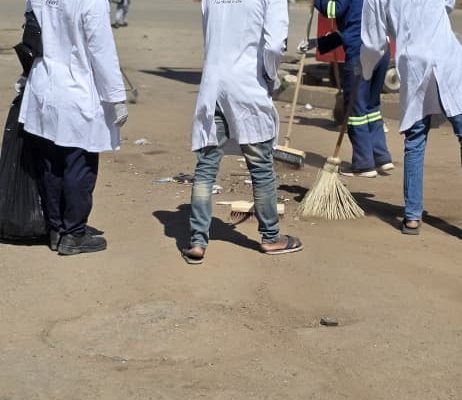
3. It protects public health. Tourism cannot thrive where cholera and typhoid are recurring headlines. Waste management is health management. The National Clean-Up Campaign, with its focus on removing illegal dumping sites, is disease prevention as much as beautification.
The November programme – Chinhoyi, Bindura, Harare CBD, Chitungwiza, Harare North, Bulawayo, Zvishavane, Mutare, Masvingo – is therefore not a scatter of events. It is a map of the country’s tourism corridors. Clean the corridor, and you clean the experience.
The lesson from Rwanda, and from Singapore before it, is that cleanliness is not a cultural trait. It is a system: laws, collection, recycling, education, enforcement, and above all, consistency. Zimbabwe has the declaration. It has the First Lady’s advocacy. It has corporates like NetOne stepping in. What it now needs is the system behind the day – bins, collection schedules, recycling value chains, and penalties that are actually enforced.
If Zimbabwe gets that right, the Forbes headline will not be a one-year wonder. It will be a baseline.












Comments