

 By
By 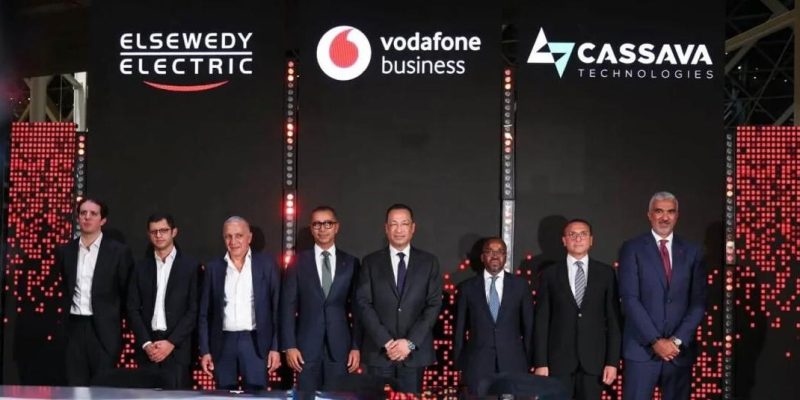
By Ross Moyo
For years the problem was simple: if you were an Egyptian startup, university, or government agency that wanted to build AI, you had to send your data — and your money — abroad.
Not anymore.
On Tuesday, September 8, 2026, Egypt signed itself into the AI infrastructure club. Cassava Technologies, Vodafone Business and Elsewedy Electric sealed an agreement to build Africa Data Centres Egypt, including the country’s first sovereign AI data centre powered by Nvidia GPUs.
The angle here isn’t just concrete and cooling. It’s control. Egypt is buying its way into the AI arms race, with $1 Billion bet on Sovereign compute made possible by Zimbabwean – owned mogul Strive Masiyiwa’s Cassava Technologies.
THE SHIFT: FROM CONSUMER TO ARCHITECT
The global AI boom has been built on a handful of hyperscalers in the US, Europe and the Gulf. African and Middle Eastern companies have been renting compute by the hour, with data crossing borders and latency slowing everything down.
That model ends in Egypt.
“We are ensuring that African businesses aren’t just consumers of global tech – they are the architects of it,” said Ahmed El Beheiry, group Chief Technology and AI Officer at Cassava Technologies and CEO of Cassava AI.
The new facility is being called an “AI factory.” Think of it as a power plant, but instead of electricity it produces compute. And instead of selling kilowatts, it will sell GPU-as-a-Service — Nvidia’s accelerated chips rented by the minute for training models, running inference, and powering large-scale AI applications.
“Through this collaboration, we are strengthening Egypt’s AI infrastructure capabilities and developing sovereign AI solutions by leveraging locally hosted global technologies that ensure data residency within Egypt,” said Mahmoud El-Khatib, vice-president of enterprise business at Vodafone Egypt.
Data residency is the keyword. Banks, hospitals, defense and government data can now be processed in Cairo, under Egyptian law.
THE DEAL: $200M NOW, $1B LATER
Witnessed by Egypt’s Ministry of Communications and Information Technology, the project is structured for scale.
Phase 1: 20MW of capacity delivered over 3 years
Full Vision: 200MW
The ministry expects US$200 million in initial foreign direct investment, scaling to US$1 billion upon completion.
For context: 20MW can run thousands of enterprise servers. 200MW puts Egypt in the same conversation as major European AI hubs.
The jobs math is also big: 200 direct jobs and 2,000 indirect jobs in construction, energy, cybersecurity, software and cloud services.
WHY THESE THREE PARTNERS
This isn’t one company doing everything. It’s a division of labor designed for speed.
Cassava Technologies brings the playbook. It already runs data centres across South Africa, Kenya and Nigeria. It’s also Nvidia’s official cloud partner in Africa, which means direct access to the GPUs everyone wants but few can get.
Vodafone Business brings the customers and the pipes. Enterprise clients, government contracts, and the fiber and cloud services to connect the data centre to the world.
Elsewedy Electric brings the power. 200MW doesn’t run on promises. Elsewedy’s expertise in energy and infrastructure is what makes the build-out possible in a power-constrained region.
WHAT THIS UNLOCKS FOR EGYPT
1. Startups: No need to buy a $50,000 GPU server. Rent compute by the hour and build in Cairo.
2. Universities: Researchers get local access to train models on Arabic data, medical data, and climate data without export restrictions.
3. Government: Sovereign cloud for digital services, smart cities, and national AI initiatives.
4. Enterprises: Banks and telcos can meet compliance rules that require data to stay in-country.
Before this, the default was Frankfurt, Dubai, or Virginia. Now the default can be Egypt.
THE BIGGER SIGNAL
This is the third leg of Africa’s data centre boom. Cassava already has scale in Southern and East Africa. Egypt gives it North Africa and a gateway to Europe and the Gulf.
More importantly, it signals a policy shift. Governments are no longer content to be downstream users of AI. They want the factories.
Minister Raafat Hendy framed it that way: the project will “strengthen the country’s digital infrastructure, support cloud and AI services, and enhance data sovereignty by enabling secure local data hosting and processing.”
WHAT HAPPENS IN THE NEXT 3 YEARS
Phase 1 construction starts now. In 36 months, Egypt should have 20MW online — enough to host national AI projects and onboard major enterprise customers.
The real test will be utilization. Will Egyptian developers actually build on it? Will government procurement favor local compute? Will the $1 billion materialize as demand grows?
If yes, Egypt won’t just host AI. It will export it.










Comments