

 By
By 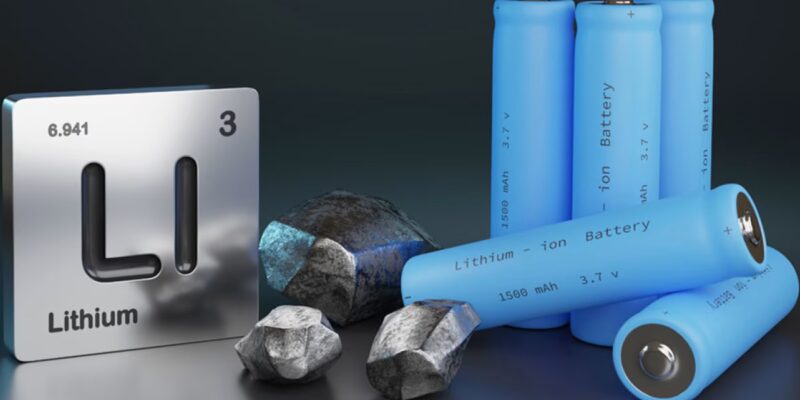
Zimbabwean government has announced an immediate and indefinite suspension of all raw mineral and lithium concentrate exports. The directive, issued by the Ministry of Mines and Mining Development, applies to all shipments currently in transit, effectively freezing the supply chain for Africa’s largest lithium producer.
The sudden policy shift marks an aggressive acceleration of Zimbabwe’s value addition strategy. While a ban on lithium concentrates had been tentatively scheduled for 2027, the government’s decision to pull this deadline forward citing national interest and the need to curb malpractices and leakages signals a new era of resource nationalism in Southern Africa.
Zimbabwe’s mining sector is the bedrock of its economy, contributing over 14% to the national GDP. In 2025, the country exported a record 1.128 million tons of lithium-bearing spodumene concentrate, an 11% increase from the previous year. Most of this volume was destined for Chinese refineries, which process the concentrate into the high-grade chemicals required for electric vehicle (EV) batteries.
By halting these exports, Harare is essentially forcing the hands of global mining giants. The message is clear: the era of shipping raw rocks is over. To continue operations, companies must now invest in domestic processing facilities capable of producing battery-grade lithium sulphate.
The Ministry’s objectives are rooted in long-term economic structural reform. The first being revenue ptimization. Processing lithium sulphate locally can significantly increase export value compared to raw concentrates.
Industrialization: The mandate compels the construction of high-tech refineries, such as the $400 million plant recently commissioned by Huayou Cobalt and the $500 million facility planned by Sinomine at the Bikita mine.
Moving up the value chain is expected to create thousands of skilled technical roles, transitioning the workforce from basic extraction to advanced chemical engineering.
However, there could be a short-term supply squeeze that could see global lithium carbonate prices spike. With Zimbabwe providing roughly 6–7% of the global lithium supply, any sustained disruption could lead to a deficit in a market that was previously trending toward a surplus.
This is a bold play for economic sovereignty, while it poses immediate logistical and contractual headaches for miners, it positions Zimbabwe to capture a much larger slice of the $3 trillion global EV market.
The success of this mandate hinges on how quickly local processing capacity can be scaled. Zimbabwe is racing to prove that it can evolve from a colonial-era extraction hub into a modern, midstream industrial powerhouse.









Comments