

 By
By 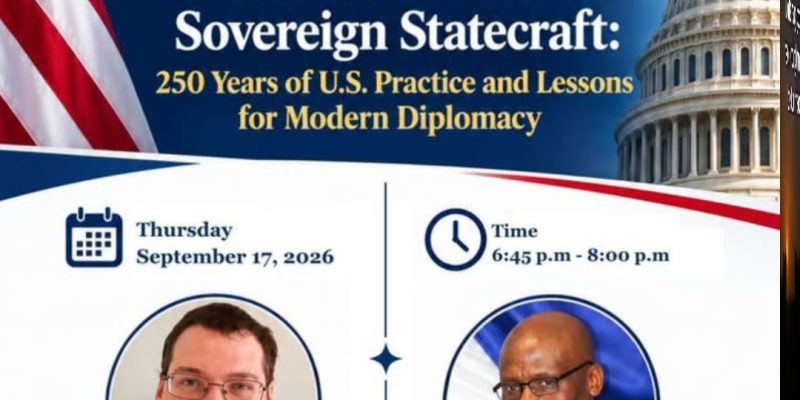
By Ross Moyo
The Public Diplomacy Section of the U.S. Embassy and the Zimbabwe Institute for Diplomacy (ZID) convened a Constitution Day discussion examining how constitutional design shapes foreign policy, stability, and diplomatic credibility. TechnoMag, covering the event, focused its reporting on the pointed questions it posed to the panel — questions tailored to Zimbabwe’s current constitutional moment and Africa’s broader governance landscape.
TechnoMag’s Core Questions to the Panel
TechnoMag reporter Ross Moyo pressed the speakers on issues central to Zimbabwe’s diplomatic aspirations — including its long‑standing ambition to secure a UN Security Council non‑permanent seat, a role it has not yet held but continues to pursue through regional blocs.
The questions included:
• What Zimbabwe and African states can learn — and what they should avoid copying — from the U.S. constitutional experience
• How to build a constitutional culture where leaders respect term limits and transitions even when they have the power not to
(asked in light of Zimbabwe’s recently signed Constitutional Amendment Act Number 3)
• Whether constitutional democracy remains a diplomatic asset in a multipolar world
• Zimbabwe’s declaration of the President’s birthday as Munhumutapa Day, and the portrayal of the head of state as “Munhumutapa II” — how does symbolism intersect with constitutional identity?
• After 250 years, is American constitutionalism a finished model or an unfinished experiment?
These questions framed the evening’s debate around how constitutional design influences foreign policy credibility — especially for states seeking greater multilateral influence.
Berkowitz: Two Principles Travel Well
Dr. Jeremy Berkowitz, Assistant Professor of Political Science at Prairie View A&M University, avoided prescribing a Zimbabwe‑specific model. Instead, he offered two broad principles from the U.S. experience that he said are transferable:
1. Protect the purse
Congress’s control of national funding is the ultimate check on executive power.
“A president cannot sustain a foreign‑policy initiative if Congress refuses to finance it.”
This fiscal constraint, he argued, stabilizes U.S. foreign policy and prevents unilateral overreach — a lesson relevant to any state seeking predictable governance.
2. Credibility through succession
The U.S. system guarantees regular leadership turnover:
• a new President every 4–8 years
• a new Congress every 2 years
“That structure… helps other countries get a sense of the near future,” he said, contrasting the U.S. with Russia and China, where uncertainty surrounds who will succeed Vladimir Putin and Xi Jinping.
For African states — including Zimbabwe, which seeks stronger multilateral standing — predictable transitions enhance diplomatic credibility.
Term Limits and Constitutional Culture
On how leaders come to respect term limits even when they have the power not to, Berkowitz linked the answer to continuity. Predictable transitions, he argued, become a diplomatic asset in themselves, signalling stability to partners and institutions such as the African Union and the United Nations.
TechnoMag’s reference to Constitutional Amendment Act Number 3 — which adjusts judicial appointment procedures — highlighted how constitutional changes can reshape expectations around leadership and succession.
Constitutional Democracy in a Multipolar World
TechnoMag asked whether constitutional democracy still functions as a diplomatic asset in an era where transactional statecraft often dominates. Berkowitz suggested that while global politics are shifting, systems that guarantee regular succession and clear checks on power still offer strategic advantages.
For states seeking roles such as a UN Security Council non‑permanent seat, constitutional predictability can strengthen diplomatic positioning.
Munhumutapa Day and Political Symbolism
TechnoMag also asked about Zimbabwe’s declaration of the President’s birthday as Munhumutapa Day, with the head of state portrayed as “Munhumutapa II.”
While Berkowitz did not address the symbolism directly, the question underscored how constitutional identity, political branding, and historical narratives intersect — sometimes reinforcing legitimacy, sometimes complicating it.
Is the U.S. Constitution a Model or an Experiment?
The evening closed with TechnoMag’s provocative question: Is American constitutionalism a finished model to emulate, or an unfinished experiment still being judged?
Berkowitz leaned toward the latter. The U.S. Constitution, he suggested, remains a living framework — still evolving, still contested, and still being tested after 250 years.










Comments