

 By
By 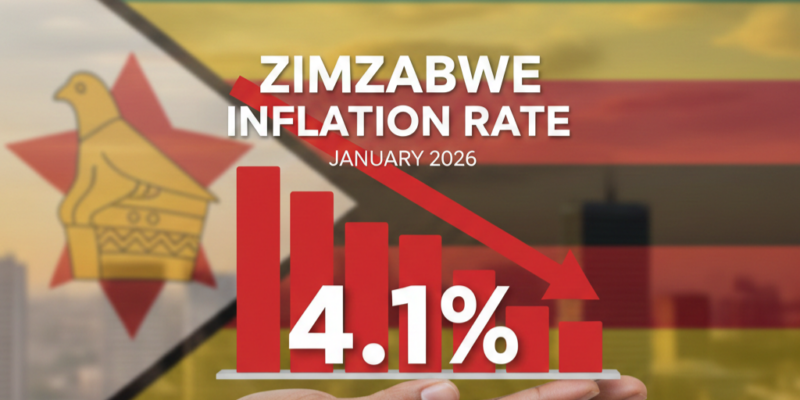
Zimbabwe has recorded its lowest annual inflation rate in nearly three decades. Following the introduction of the gold-backed currency (ZiG) in April 2024, the Ministry of Finance, Economic Development and Investment Promotion announced that annual inflation plummeted to 4.1% in January 2026. This marks a dramatic decline from the 15% recorded in December 2025 and the staggering 82.7% peak witnessed in September 2025.
While the government celebrates this “prosperous milestone,” economic analysts are beginning to question the underlying costs of such rapid disinflation, the first being the 2026 budget.
The 2026 National Budget is anchored on extreme fiscal discipline, aiming for a negligible 0.2% deficit. This tightrope approach is a core part of the government’s strategy to anchor the ZiG and prevent exchange rate volatility. However, this discipline often results in significant cash flow issues.
To make it more understandable, they might rise a sudden shortage of cash or assets that can be easily converted to cash. Think of it like everyone trying to withdraw money from the bank at once, but the bank doesn’t have enough liquid assets to pay everyone.
Also, the domestic expenditure arrears money owed to local contractors and suppliers reportedly ballooned forty-fold, rising from US$34 million in late 2024 to over US$1.3 billion by late 2025. Critics argue that the 4.1% inflation figure may be a symptom of a liquidity freeze rather than organic economic stability, as businesses struggle to operate without timely payments from the Treasury.
A central critique of the 2026 fiscal plan is the apparent trade-off between low inflation and infrastructure development. The budget allocates roughly ZiG 4.6 billion to infrastructure and roads, a figure dwarfed by the allocations for Primary and Secondary Education (ZiG 47.4 billion) and Health and Child Welfare (ZiG 30.4 billion).
The health sector, in particular, remains under severe strain.
Despite the single-digit inflation environment, the Ministry of Health was advised to cap its 2026 bid significantly lower than its original request, leading to warnings of a looming funding crisis.
Failing to maintain the physical backbone of the economy which are roads, power, and hospitals will eventually undermine any gains made in monetary stability.
Not only the above but perhaps the greatest threat to Zimbabwe’s new economic reality is its massive debt burden. The country is currently carrying US$23.4 billion in public and publicly guaranteed debt, with approximately US$7.7 billion in external arrears.
Every dollar diverted to debt service is a dollar not spent on essential public services.
The government is currently in critical talks with the IMF for a staff-monitored program, seen as a vital step toward debt resolution and unlocking future global financing.
Whether the 4.1% inflation rate represents a sustainable new era or a temporary result of suppressed spending remains the ultimate test for the Zimbabwean economy in 2026.









Comments