

 By
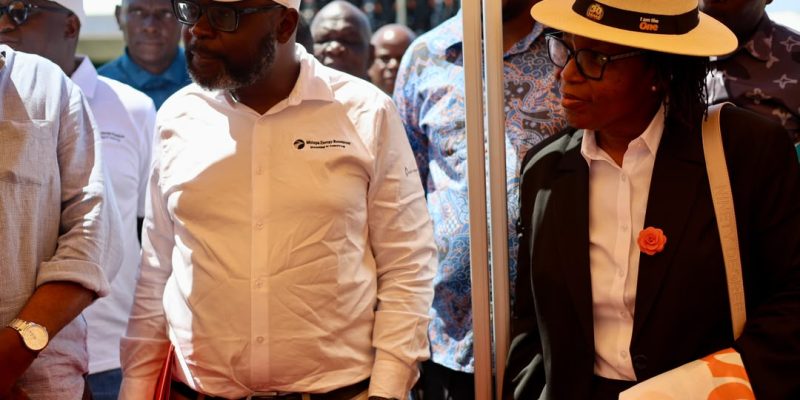
By Ross Moyo
He did not come to Mberengwa to talk about SIM cards and data bundles.
He came to tell children who walk kilometres to school, who study by candlelight when power cuts, and who have never touched a robot, that they could be the next software developer, robotics engineer or digital entrepreneur in Zimbabwe.
“The future belongs to those who are willing to learn, explore, innovate and embrace change. Do not be afraid of technology. Be curious about it,” the NetOne Group Chief Executive Officer told learners at the Mberengwa Schools Fair.

“Ask questions, experiment with new ideas and use digital platforms responsibly.”
The fair, organised under the Digitalize Zimbabwe ICT Expo Programme, brought together schools from across Midlands District, with exhibitions in coding, robotics, artificial intelligence, digital entrepreneurship and software development.
For many learners, it was their first time seeing a robot move on command, their first time using a tablet to learn mathematics interactively, their first time live-streaming an event from their own school.
The GCEO said that is exactly the point.
“We want to see learners in Mberengwa and across the country moving beyond being consumers of technology to becoming creators, innovators and problem-solvers,” he said.
“We want to inspire our young people to explore fields such as coding, robotics, artificial intelligence, digital entrepreneurship, software development and other emerging technologies.”

Zimbabwe’s need for those skills is urgent. The country produces about 5,000 ICT graduates a year from universities and colleges, but the digital economy needs three times that number, according to the Ministry of ICT. At the same time, over 70 percent of Zimbabwe’s population is under 35, and youth unemployment is estimated at over 60 percent.
Digital skills are one of the few pathways that allow a young person in Mberengwa to earn without leaving Mberengwa. A young coder can freelance for a client in Harare, Johannesburg or London from a rural growth point, if the connectivity and the skills are there.
That is why NetOne’s message was not just about infrastructure. It was about mindset.
“Believe in your potential and take advantage of the opportunities presented through this Schools Fair,” the GCEO said.
He thanked the Ministry of ICT, Postal and Courier Services, Mutapa Energy Resources, Video Promotions, teachers, parents and learners for embracing the programme, and called for stronger partnerships between government, private sector, educational institutions and communities.
“Let us continue strengthening partnerships between Government, the private sector, educational institutions and communities to advance digital inclusion and innovation.”
As the fair closed, learners were still gathered around exhibition stands, asking questions, touching screens, taking photos.
In Mberengwa, where gold and chrome have long defined the economy, a new mineral is being mined: the curiosity of children.
And as NetOne’s boss put it: “Together, let us connect, innovate and digitalise Zimbabwe!”
“Tatenda, Siyabonga, Twalumba.”










Comments