

 By
By 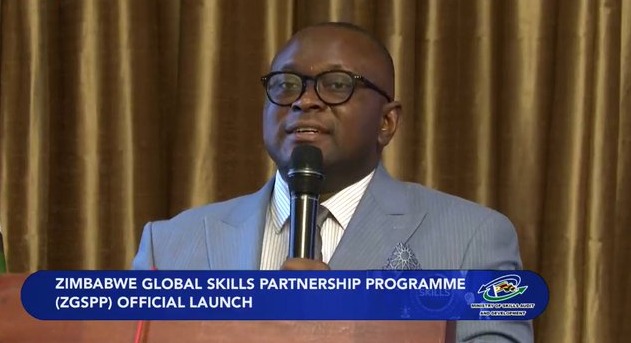
The Ministry of Skills Audit and Development has launched a national skills coordination programme aimed at addressing critical labour shortages, improving the alignment of education with industry needs, and systematically engaging the diaspora.
The Zimbabwe Global Skills Partnership Programme (ZGSPP) and its accompanying digital coordination hub were officially launched on by the Minister of Skills Audit and Development, Dr Jenfan Muswere in Harare.
The ZGSPP is designed as a central governance platform for the country’s skills placement system. According to the ministry, the programme seeks to address three interconnected problems, a domestic skills deficit in key technical sectors, the underutilisation of diaspora expertise, and a mismatch between what the education system produces and what the economy requires.
Speaking at the launch, Dr Muswere framed the initiative as a response to long standing structural weaknesses in Zimbabwe’s human capital strategy. He noted that the country has historically failed to process its own raw materials despite possessing deposits of limestone, calcium carbonate, silicon, and slag, which are essential for cement production. The result, he said, has been unnecessary reliance on imports.
“If you have the resources but are deficient in intellectual power, your sovereignty is compromised,” Dr Muswere said.
The Minister extended the same argument to agriculture, pointing out that Zimbabwe continues to import cooking oil despite having the capacity to grow sunflowers and groundnuts. He attributed such gaps to deficient planning and skills coordination rather than a lack of natural resources.
At the continental level, Dr Muswere noted that intra-African trade remains below 20 percent, even though Africa holds some of the world’s largest reserves of lithium, gold, and iron ore. He argued that the absence of sufficient technical capacity to process raw materials into finished goods has kept the continent in a subordinate position in global value chains.
The ZGSPP is also intended to address diaspora engagement. The government estimates that a significant portion of Zimbabwe’s most skilled professionals currently work abroad. The programme will include mechanisms for return migration, remote knowledge transfer, and structured investment in local institutions.
Dr Muswere acknowledged the challenge directly that the issue is how best they can harness and coordinate them.
The Ministry is also developing a career guidance programme to steer more students into Science, Technology, Engineering, and Mathematics (STEM) disciplines. “We must ensure that STEM becomes the foundation for us to be able to grow our economy,” said Dr Muswere. This aligns with the government’s heritage-based education model, which emphasises practical and technical skills over purely theoretical instruction.
In the health sector, Dr Muswere cited medical tourism as a drain on foreign currency and a symptom of inadequate specialist skills. He questioned why Zimbabwe continues to send patients abroad for procedures such as heart transplants, and suggested that a coordinated medical workforce could reduce that expenditure.
The ZGSPP digital hub will serve as the central coordination platform for placements, skills audits, and diaspora linkages.










Comments