

 By
By Ross Moyo
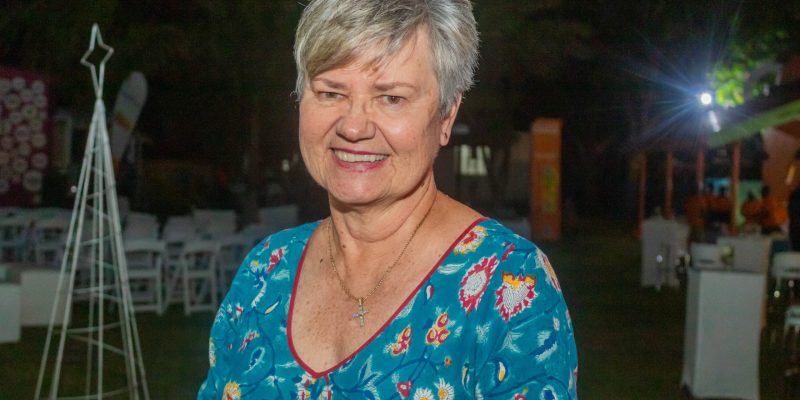
Dr Nancy Jonker’s quiet presence at Rainbow Children’s Village belies 16 years of work that has kept children with cancer alive in Zimbabwe — work most Zimbabweans never see: the scan.
“I’m Dr. Nancy Jonker, and we are here at the blessing of the Rainbow Children’s Village.”
“So for the last 16 years, the Diagnostic Imaging Centre has been providing radiology services to the children that are undergoing cancer treatments at Parirenyatwa Hospital,” Jonker said in an exclusive interview with TechnoMag.
The children she talks about are on the cancer ward — Ward A4 Special at Parirenyatwa Hospital. The only public paediatric cancer ward in Zimbabwe.
“These children come from the rural districts of Zimbabwe. They often have absolutely no financial support. And they come to the tertiary hospital, which is Parirenyatwa Hospital, for treatments and investigations.”
Zimbabwe’s childhood cancer data explains why Jonker’s role is critical:
THE DIAGNOSIS GAP
Zimbabwe records 293 childhood cancers annually (National Cancer Registry 2018), but WHO estimates true incidence is 550+ — meaning nearly half are never diagnosed.
80% of children in Zimbabwe present at Stage 3 and 4 — late stage — compared to 20% in high-income countries.
Reason: No scan. No diagnosis. No staging.
Childhood cancers cannot be diagnosed clinically. A child with headache needs MRI to see low-grade glioma. A child with swollen belly needs CT to stage Wilms tumour (kidney cancer). A child with white eye needs MRI to confirm retinoblastoma before eye removal.
Parirenyatwa Hospital’s imaging machines are often down. In 2023, the hospital had no functional CT for 8 months and no MRI. Private CT scan costs US$250-US$400. MRI costs US$600-US$1,500. Average rural family income: US$50/month.
This is where Jonker stepped in.
THE PARTNERSHIP
“So the role of the Diagnostic Imaging Centre is partnering with KidsCan, who help to fundraise to support these children to have investigations, which we do at the Diagnostic Imaging Centre.”
KidzCan Zimbabwe, founded in 2009 by survivor Andrea Whatman, is Zimbabwe’s only childhood cancer organisation. It funds chemotherapy, blood products, transport, and critically — diagnostics.
“We are able to provide services to these children at a huge discount. We do the scans very, very heavily subsidised, actually below cost, just to provide a service to these children.”
Below cost. For 16 years.
WHAT SCANS DO
“So they are able to access CT scans and MRI scans to help with the diagnosis and the staging of their cancers.”
Medical explanation:
CT scan: Shows size of tumour, spread to lungs, liver. Needed to stage Wilms tumour (17% of Zimbabwe childhood cancers), lymphoma (13%), neuroblastoma.
MRI scan: Gold standard for brain tumours — low-grade glioma is one of WHO’s six index childhood cancers. Also for retinoblastoma (15% of cases) to see if tumour has spread to brain.
Staging determines treatment: Without staging, oncologists cannot decide chemo dose, surgery, radiotherapy. A Wilms tumour Stage 1 needs 6 months chemo. Stage 4 needs 12 months + radiotherapy + lung surgery.
Daniel Mckenzie, KidzCan Executive Director, says: “Communities don’t know children get cancer. Our job is to bridge that knowledge gap. Every dollar raised helps us support more children through diagnostics, medications and housing at Rainbow Village.”
In 2024, KidzCan supported over 1,000 children. Each needed 2-4 scans. At market rate, that is US$1.2 million. At Jonker’s subsidised rate, it is less than 30%.
WHY RAINBOW VILLAGE MATTERS TO A RADIOLOGIST
Jonker was at Rainbow Children’s Village — built by Meikles Foundation, Roundtable Zimbabwe and KidzCan at US$1.57 million — for its blessing.
Why does an imaging doctor care about accommodation?
Because a child who cannot afford a scan also cannot afford a night in Harare. The Village provides free accommodation for families from more than 15km outside Harare. Without it, they abandon treatment between scan and chemo.
KidzCan nurse Charity Kawadza: “Patients who come to stay with us at the village are those who are in between treatment. They would have already started treatment and they need a small break, but they cannot go home, which is maybe too far.”
Zimbabwe has 3 paediatric oncologists. It has one public MRI for children — at Parirenyatwa, often broken. Diagnostic Imaging Centre has become the de facto paediatric radiology department.
For 16 years, Jonker has not advertised it. She just scans.
As Pastor Gary Cross, KidzCan Chairman, said at the same blessing: “This was something that God initiated.”
For Jonker, God initiated it through a CT scanner offered below cost to a child from Dotito with no shoes, no bus fare, but with cancer that could be cured if seen early.
WHO says if childhood cancers are diagnosed early and appropriate treatment given, 80% can be cured. In Zimbabwe, survival is 20% — because diagnosis comes too late.
Diagnostic Imaging Centre is trying to change that denominator, one subsidised scan at a time.







Comments