

 By
By Ross Moyo
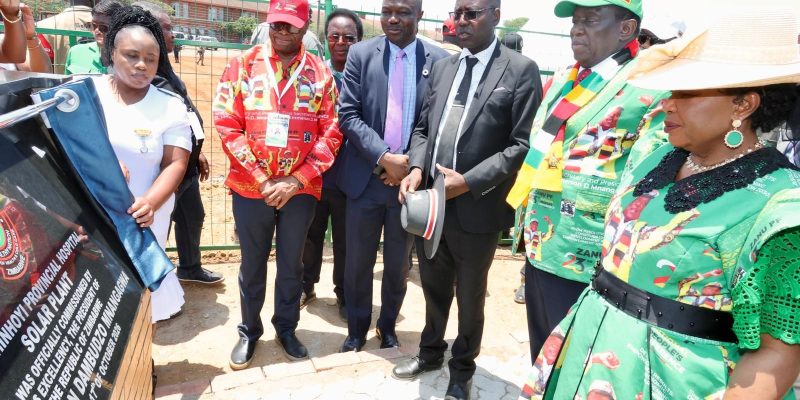
Yesterday, His Excellency the President of Zimbabwe, Dr. Emmerson D. Mnangagwa, officially commissioned the solar power plant at Chinhoyi Provincial Hospital, marking a major milestone in the country’s drive for climate-smart health systems.
Installed through a partnership between the Ministry of Health and Child Care, the Global Fund and UNDP, the solar power plant was commissioned on the sidelines of the 23rd ZANU PF Annual People’s National Conference in Chinhoyi, where the President also commissioned an oxygen plant and other provincial projects.
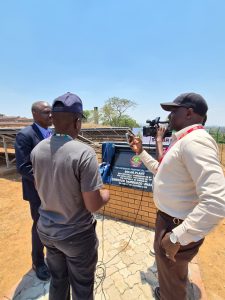
President Mnangagwa announced that Chinhoyi Provincial Hospital would unveil a new solar power plant and medical oxygen facility constructed with assistance from international partners — projects that demonstrate cooperation between Government, development partners and other stakeholders in strengthening essential services.
From Darkness to Dignity: Why Solar Matters for Hospitals
For y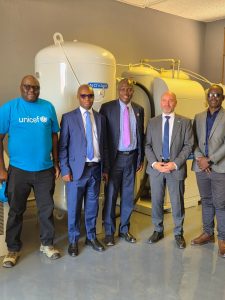 ears, health workers in Zimbabwe operated under the constant threat of ZESA grid failures. Mothers gave birth in darkness, ARVs spoiled in fridges, vaccines were lost, and blood samples went untested.
The Solar for Health (S4H) initiative, coordinated by the Ministry of Health and Child Care with support from the Global Fund and UNDP since 2016-2017, has rewritten that story.
Verified national data shows:
– At least 1,044 health facilities nationwide have been equipped with solar units, achieving a cumulative capacity of 11 megawatts.
– In 2024 alone, 1,072 health facilities equipped with solar avoided 17,699 tonnes of CO2.
– Another 188 facilities are set to be upgraded to bring green energy to 70% of clinics nationally.
– The Global Fund has also supported 447 solar-powered boreholes, 178 pharmacy stores, and retention allowances for 25,000 health workers.
At Bulawayo United Hospitals (UBH), a central referral hospital serving five provinces, a 350kW solar plant installed in February 2026 has significantly strengthened power reliability and reduced diesel costs. The Senate Thematic Committee on Peace and Security singled out UBH as a model of how renewable energy can improve resilience.
At Gwanda Provincial Hospital, the installation — approximately 120 photovoltaic panels, a 30-kW inverter, and 24 batteries — now prioritizes maternity and pharmacy blocks. At Victoria Chitepo Provincial Hospital in Mutare, a 140kW system is operational. At NatPharm Harare warehouse, a 450kWp system saves US$150,000 annually in electricity and feeds excess to the grid.
Chinhoyi Joins the National Grid of Green Hospitals
The Chinhoyi Provincial Hospital plant now joins this growing network. While capacity details are being finalized, the model is proven: automatic transfer switching across grid, solar/battery, and generator, real-time dashboards tracking generation and state-of-charge, and skills-transfer arrangements between UNDP and local engineers to ensure sustainability.
Dr. Trust Mushawarima, Acting Clinical Director at UBH, said after his own commissioning: “This initiative will provide us with sustainable power, ensuring all machines run 24/7. Clinic services won’t be interrupted… It will reduce our electricity costs in the long term, and we will even be able to contribute to the national grid.”
For Chinhoyi, which serves all of Mashonaland West, reliable power means:
– Maternity wards, theatres, ICUs, and cold-chain facilities receiving dependable power
– Uninterrupted laboratory testing, medication storage, and patient monitoring
– Vaccines and ARVs stored safely in solar-powered fridges
– 24-hour maternity services under reliable lighting
Sustainable Energy. Stronger Health Systems.
The partnership has evolved from an emergency COVID-19 response into a long-term healthcare strengthening programme that is now attracting international interest.
UNDP Zimbabwe Resident Representative Ayodele Odusola says eight countries — including Nigeria, Mozambique and Malawi — are planning study visits to Zimbabwe to learn how the solar-for-health initiative is being implemented.
The Chinhoyi commissioning reflects the broader vision articulated by President Mnangagwa at Kwekwe in May 2026: “This initiative is part of ongoing efforts to diversify the national energy mix and build resilience against climate change. Our country is endowed with abundant solar radiation. The sun is our silent partner.”
The project directly advances SDG 3 — Good Health and Well-being and SDG 7 — Affordable and Clean Energy, while supporting Vision 2030’s push for modern, resilient infrastructure.
Reliable, clean energy means more resilient health facilities, uninterrupted essential services and better healthcare for communities.
In Chinhoyi, the sun is now powering the theatre.
Sources: UNDP Zimbabwe Solar-for-Health Reports, Ministry of Health and Child Care, Global Fund, Senate Thematic Committee Report on Energy Security June 2026.











Comments