

 By
By 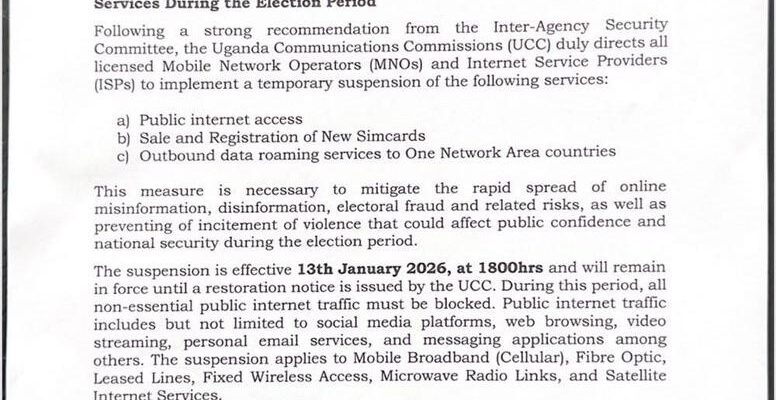
By Ross Moyo
In a directive issued on 13th January 2026, Uganda’s communications regulator UCC instructed MNOs and ISPs to implement a temporary shutdown of public internet and selected mobile services to safeguard the election environment. The order takes effect at 1800hrs on the same day and will remain until a restoration notice is issued.
The restrictions include halting public internet access, banning the sale and registration of new SIM cards, and disabling outbound data roaming to One Network Area nations. These steps are intended to create a controlled communications landscape during the election period.
The UCC explains that the suspension is necessary to prevent online misinformation, electoral fraud and related threats to national security. Authorities link unrestricted internet use to risks of inciting violence and undermining public confidence in the electoral process.
The blackout will block non‑essential internet traffic such as social media, web browsing, video streaming, email and messaging apps. The affected services encompass Mobile Broadband (cellular), Fibre Optic, Leased Lines, Fixed Wireless Access, Microwave Radio Links, and Satellite Internet services.
A defined exclusion list allows essential communications infrastructure to stay active for network monitoring and abuse detection. Access to these exempted systems is restricted to authorised personnel and must be implemented through secure, whitelisted mechanisms like dedicated IP ranges, VPNs or private circuits.
The UCC stresses that the measure is temporary and focused on protecting the integrity of the election and ensuring public safety. The commission will enforce strict compliance and maintain oversight of the exclusion list to prevent misuse of the remaining services.
Businesses and citizens are urged to plan for limited connectivity, relying only on the essential services permitted by the exclusion list for critical communications during the suspension period.






Comments