

 By
By 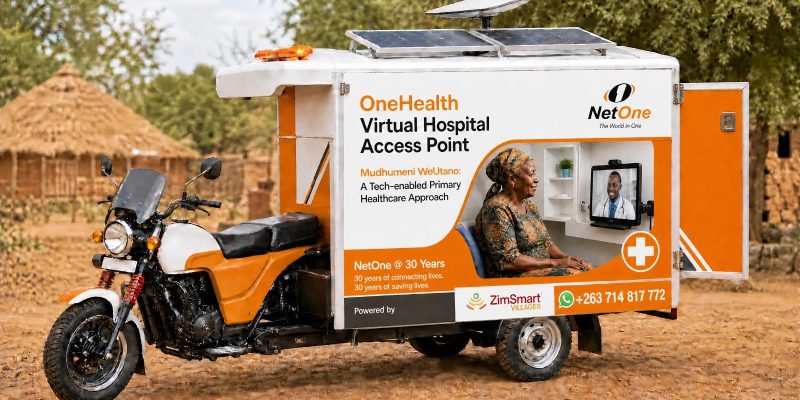
NetOne is set to launch and showcase Health on Wheels, a pioneering ward-based mobile telehealth and primary-care access programme, during the 23rd ZANU-PF People’s National Conference on the 17th of October 2026 in Chinhoyi. Developed as a collaborative initiative between the telecommunications giant NetOne and innovation ecosystem ZimSmart Villages, the project aims to extend vital medical support to rural and peri-urban communities across Zimbabwe.
Marking its 30th anniversary, NetOne is funding the rollout of 100 mobile health kiosks across Zimbabwe to bridge healthcare access gaps in rural and peri-urban wards.
The initial phase features the deployment of 10 solarized, Starlink-enabled three-wheeler mobile health kiosks, with one allocated to each of Zimbabwe’s ten provinces.
The landmark programme is designed to bridge critical gaps in primary health care delivery by combining mobile access, static telehealth, AI-supported services, and last-mile delivery.
The comprehensive exhibition features a complete access network comprising 10 solarized and Starlink-powered mobile health outreach tuk-tuks, two static telehealth kiosks equipped for diagnostics and virtual consultations, and 10 “Mudhumeni WeUtano” solarized bicycles to extend community mobilization and digital health promotion at the grassroots level.
The Health on Wheels model operates around a continuous cycle of screening, consultation, treatment, and follow-up. Nurse- and community health worker-facilitated outreach points offer vital screening services, including blood pressure and glucose checks, non-communicable disease (NCD) risk reduction, and maternal, child, and HIV/TB health navigation.
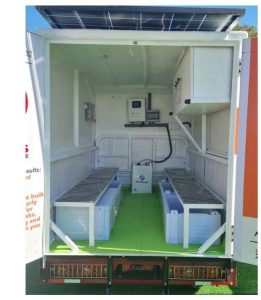
Patients can access clinician-led tele-triage for low-risk concerns, care-plan clarifications, and streamlined specialist referrals.
Importantly, the initiative addresses critical emergency transport needs in remote areas.
While not a substitute for an ambulance or a full hospital, the solarized tuk-tuks provide structured last-mile evacuation and prompt clinical handover for maternal emergencies, snakebites, and other approved acute traumas from rural homesteads to designated local clinics. The model also ensures continuous access to chronic medications, such as antiretroviral drugs and vaccines, safely bridging the gap between patients and the public health system.
“Through ZimSmart Villages, we are bringing together digital-health solutions, community-based outreach and clinical support to create a connected pathway to care. The kiosks will help communities access initial screening and health information while enabling patients to connect with clinicians and receive appropriate referrals and follow-up. Our focus is to ensure that technology translates into practical healthcare solutions for people who have traditionally faced challenges accessing these services,” said Mr Jokwiro.
Drawing inspiration from successful international frameworks in Ghana, Nigeria, Kenya, and Uganda regarding community-based tricycle and motorcycle transport, Zimbabwe’s model goes a step further by integrating transport directly with ward-based telehealth and digital service navigation.
As NetOne marks its milestone anniversary of community investment, the Health on Wheels rollout at the Chinhoyi conference represents a transformative step toward achieving universal health access and modernization in alignment with the Alma-Ata and Astana declarations.
NetOne spokesperson Ernest Magadzire said the investment reflects NetOne’s commitment to ensuring that connectivity delivers tangible benefits to communities.
“ Through OneHealth, we are demonstrating that our responsibility extends beyond providing telecommunications services to supporting solutions that address real community needs. By financing these mobile health kiosks, we are helping bring essential healthcare closer to underserved communities and contributing to a healthier, more inclusive Zimbabwe,” said Magadzire.
Delegates attending the Chinhoyi conference are expected to tour the live, solarized, and Starlink-enabled exhibition, witnessing firsthand how technology and strategic partnerships can transform primary healthcare delivery nationwide.










Comments