

 By
By 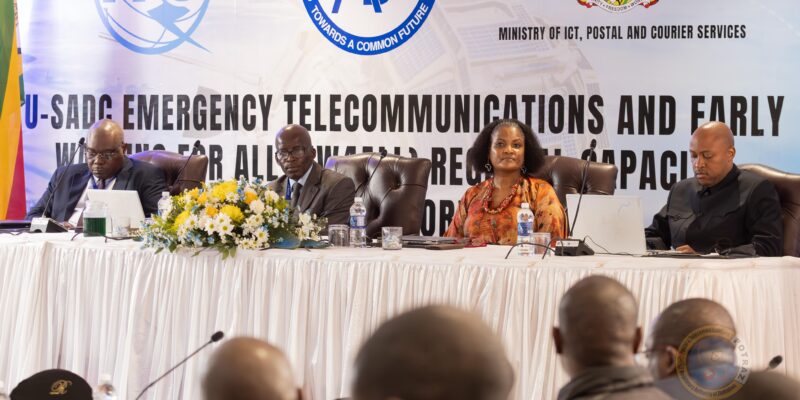
By Ross Moyo
The Southern African Development Community (SADC) region is highly vulnerable to climate-induced disasters, including tropical cyclones, floods, and droughts.
Speaking at the ITU-SADC Emergency Telecommunications and Early Warning for All (EW4All) Workshop in Harare, deputy Minister of Information Communication Telecomunication , Hon Dingumuzi Phuti said that timely and reliable communication is the one of the most important sector to effectively manage disasters.
“Timely, reliable and coordinated telecommunications are the backbone of effective disaster response,” said Hon Dingumuzi Phuti.
Over the years, the SADC region’s vulnerability to disasters has been exacerbated by its physical exposure to weather events, low adaptive capacity, and high dependence on climate-sensitive livelihoods and natural resources.
*Key Impacts of Climate Change in SADC:*
– *Food Insecurity*: Over 43 million people in the region experience acute food insecurity due to climate-related disasters.
– *Water Scarcity*: Drought-induced water scarcity threatens agriculture, industry, and human consumption.
– *Displacement and Migration*: Climate-related disasters displace millions, straining host communities and resources.
*Pathways to Climate Insecurity:*
– Worsening livelihood conditions
– Increasing migration and displacement
– Changing mobility patterns
– Exploitation of natural resources
The SADC region’s vulnerability to climate change underscores the need for coordinated disaster risk reduction and management efforts.











Comments