

 By
By 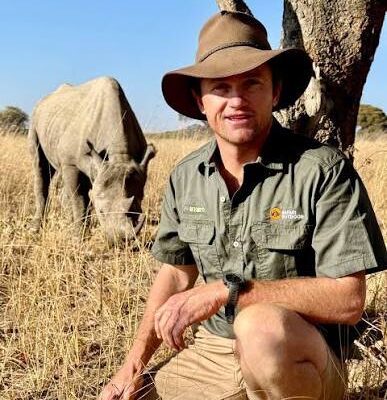
By Ross Moyo
Crates opened on Lake Kariba’s shores today carrying more than rhino. They carried a 25-year conservation investment led by Imire Rhino and Wildlife Conservancy, now paying out in Matusadona.
Imire’s role began in 1987 when ZimParks designated it an Intensive Protection Zone and entrusted it with seven orphaned Zambezi Valley rhino. The move was risk management: extract high-value genetics from a poaching hotspot and breed them in safety.
Those genetics are home. Descendants of the original orphans were airlifted from Imire, Matobo and another site and placed in bomas for monitoring before release into a secure 175km² zone with GPS tracking.
“Words cannot describe the feeling of watching these rhino touch ground once again in Matusadona. It is a moment filled with pride, hope, and belief in the power of long-term partnership and shared vision. Today is not only about the rhino themselves, but about the extraordinary dedication shown over the past 25 years by rangers, conservationists, partners, and local communities who helped safeguard these animals for their eventual return to their rightful home range,” said Reilly Travers, Conservancy Manager of Imire Rhino and Wildlife Conservancy.
Travers frames it as partnership economics. Rangers absorbed high-risk anti-poaching patrols. Communities in Nyaminyami acted as an early warning network. NGOs like Dambari Wildlife Trust and Matobo National Park sustained protection through volatile periods.
From a business lens, Imire blends conservation with sustainable tourism and education. Visitors who might never otherwise see rhino get access, building long-term advocacy and funding. That advocacy now funds Matusadona’s recovery.
Each animal carries a tracking device linked to real-time monitoring. That reduces response time to stress or conflict and lowers insurance risk for the founder population, a key metric for donor capital.
Traditional leaders Chiefs Mola, Masampakaruma, Nebiri and Negande backed the return from the start. Their advocacy converts community land-use decisions into conservation outcomes at scale.
Travers says the moment proves shared vision scales beyond one property. “Without their commitment, this return would not have been possible,” he noted, crediting partners across Zimbabwe’s sector.
Regionally, the move strengthens the Zambezi Valley corridor. Matusadona, Lake Kariba and surrounding conservancies now have a stronger genetic node for black rhino recovery across borders.
For Imire, it closes a loop started in 1987: protect, breed, return. The ROI is measured in living animals on their ancestral range.











Comments