

 By
By Ross Moyo
From 2 hours by road to 34 minutes by air — Zimbabwe’s first long-range healthcare delivery flight takes off.
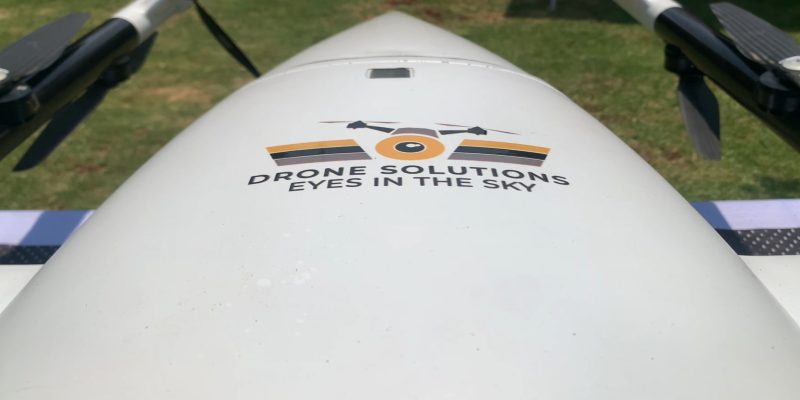
A drone took off from Health Point Lanark in Harare yesterday morning, landed in Marondera 34 minutes later, dropped medical supplies, picked up a return parcel, and flew back.
By road, that same trip can take two hours.
That flight — witnessed by Technomag — was the public launch of Drone Solutions Zimbabwe’s long-range healthcare delivery service, in partnership with Health Point Hospital.
The demonstration was not just about one flight. It was a proof-of-concept for a new layer of health logistics the company wants to build across Zimbabwe.
“What they want to venture into is delivery of emergent supplies. It can be blood, it can be anything that is very emergent to their other stations,” said Nokuthula Matsikita, General Manager of Drone Solutions, in an interview with Technomag. “They have Health Point in Marondera, another one in Upper East as well, so they want to be able to do that and forego the traditional route of ambulances or road transport.”
Client, not hub — who does what
Health Point, which reopened in 2017, is coming in as a client, not as an operator, Matsikita clarified.
“Health Point is coming in as a client. As Drone Solutions we are an accredited operator, accredited by the Civil Aviation Authority of Zimbabwe and we have all the necessary approvals that are required to carry out drone delivery services,” she said. “We are coming in as a service provider to them.”
The structure is critical for regulatory compliance. Drone Solutions holds the CAAZ approvals, including Beyond Visual Line of Sight (BVLOS) — the permission to fly beyond the pilot’s eyesight, which is essential for Harare-Marondera.
“We already got the CAAZ approvals. Some two, three weeks ago we made an announcement. We got our drone delivery approvals along with BVLOS operations,” Matsikita said.
Why drones beat ambulances on a 15-minute drive
Beyond the long-range route, Drone Solutions is also running short shuttle services between Health Point’s Upper East and Lanark stations — a distance that can be less than 10km.
Matsikita says even that matters.
“There are a lot of emergencies that can happen. Maybe there is someone who is on the surgical table who requires two or three pints of blood,” she said. “Instead of having an ambulance or motor vehicle being driven from near Parirenyatwa all the way to here, we are providing aerial delivery.”
Traffic is the killer. “Coming from here to Upper East, it can take you 15, 20 minutes, but sometimes a patient doesn’t have that much time. The solutions we are coming with, it is very fast, it is very efficient and you can deploy it anytime.”
For Harare-Marondera, she put numbers to it: 34 minutes by air versus up to two hours by road with toll gates and congestion.
The machine: 4KG payload, double redundancy, 200km range
The drone used yesterday is a Kite Aero VTOL — Vertical Take-Off and Landing. It takes off vertically on four motors, climbs to a transition height of 60-80 metres, then transitions to forward flight as a fixed-wing aircraft for efficiency.
Matsikita walked Technomag through the engineering:
Maximum payload is 4KG, measured by an integrated scale in the cargo bay. Everything flight-critical is redundant. Two batteries in the pod hub. Dual motors. If one battery or motor fails, the other keeps the aircraft flying.
“The chances of this drone crashing or failing totally are next to zero because of that redundancy,” she said.
It is fully battery-electric. One battery gives up to 200km, but Drone Solutions limits operational legs to 150-170km for safety.
That range limit creates a new kind of infrastructure — port swap locations.
“A port swap location is where we change the battery. When the battery is running out, we exchange it. Put a fresh one,” Matsikita explained. “So meaning that with one battery you can fly up to 200km, but however for us to be safe, we just stay at around 150 to 170km.”
In those swap stations — which could be in Murewa, Plumtree or any corridor — the company does not need licensed pilots. It trains locals.
“We engage the locals in that particular area, we just teach them what needs to be done, what they need to look out for. And also even where the drone will be landing, it will be someone’s place. So for safety reasons we also have agreements with the locals, the owner of the land.”
It is a deliberate link to National Development Strategy 2 (NDS2) and local job creation.
“If we manage to get to the scale that we want, we are looking at hundreds, potentially thousands of jobs. Because this can be operations running day and night. There will be a lot of pilots, technicians required.”
The company also runs a drone pilot training school and says its doors are open to youngsters.
Business model: proof first, contract next
On who pays, Matsikita was candid: today was a demonstration, not a commercial contract.
“I wouldn’t really say it is beyond donor funding, because we don’t really mind where the money comes from. It can be donor funded, government, anyone. Because this is a demonstration, we haven’t really had a partnership as yet. We are not yet contracted. We are hoping after this, we will then have the contract.”
She added that the economics depend on delivery density and that turnaround is driven by battery and demand, not airframe limits: “You can make as many flights as you can. It depends on a number of variables.”
The return leg yesterday proved the point — Marondera confirmed receipt and loaded a return parcel for Harare, closing the loop.
Data security — from flight hack to fingerprint
Two security layers — flight and patient.
“On flight data, the system that we use is mostly protected by the manufacturer to avoid hacking or someone else taking over the aircraft. The manufacturer invites good hackers to find loopholes so they can improve the system. The system is safe, 100% safe in terms of avoiding trespassing,” she said.
For patient data, the company says it is aligned to Zimbabwe’s data protection laws and uses biometric custody.
“Our parcels are packaged in such a way that the person who collects the parcel has to sign for it, they have to have a fingerprint ID. Like with Health Point, when the drone lands, it’s not anyone and everyone that can receive the parcel. It is someone with a fingerprint ID that can open the parcel.”
What’s next — whole country
Drone Solutions says Marondera is just corridor one.
“We actually want to conquer the whole country. We want to cover the whole of Zimbabwe. That’s the dream,” Matsikita said.
The company now wants partnerships beyond the private sector.
“We need support from government. The biggest player in healthcare is government. We want this technology not to become available to people that can afford only, but also to people that cannot afford because government is involved in funding. And even in other sectors — telcos — support, partnerships, collaborations. Sometimes collaborations may not even be monetary but just sharing ideas.”
She closed with why a mother in Marondera should look up:
“Things to do with health, you never know. Anything can happen. You find that in the case anything happens to you or your loved one, you are the next person looking for this drone delivery to say, can the drone just get here on time?”
Yesterday, for the first time, it did — in 34 minutes.











Comments