

 By
By Ross Moyo
Digital infrastructure must move beyond connecting people to creating meaningful economic opportunities that enable businesses of all sizes to compete, innovate and participate in Africa’s growing digital economy.
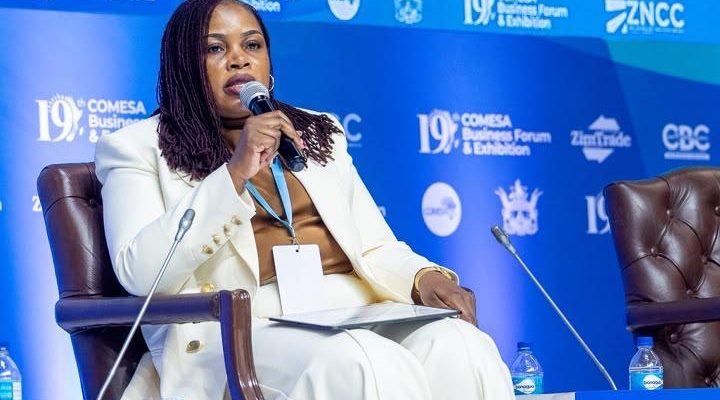
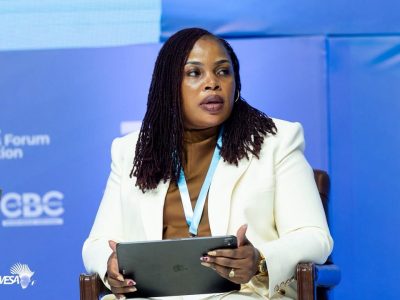
This was said by Liquid Intelligent Technologies Zimbabwe Vice President and Chief Executive Officer, Ms Lorreta Songola, during the 19th COMESA Business Forum and Exhibition held in Harare.
Speaking during a high-level panel discussion titled “The Digital Backbone: Scaling AI, Data and Digital Trade Infrastructure”, Songola said digital transformation can only become inclusive when SMEs, start-ups, schools, public institutions and businesses in smaller towns can access the same underlying connectivity as larger organisations.
“If digital infrastructure and new technologies are to translate into real productivity gains for businesses of every size, and not only for the largest firms, access must be a priority. Only with access can Zimbabwe experience real digital transformation,” she said.
She said for access to be possible, it must be affordable.
The Liquid Zimbabwe CEO said for many businesses, the cost and complexity of adopting technology remains a hindrance.
“We therefore need models that let businesses consume connectivity, cloud, cybersecurity and digital services according to their needs, without making significant upfront investments,” she said.
Songola was responding to a question on what COMESA needs to invest in over the next 12 to 24 months for digital infrastructure and new technologies to translate into real productivity gains for businesses of every size.
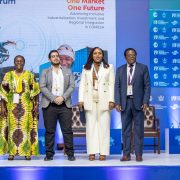
The session was facilitated by the Director General of the Postal and Telecommunications Regulatory Authority of Zimbabwe (POTRAZ), Dr Gift Machengete, and featured Mr Ahmad Hamwi of RINATO Space, Zambia, Ms Hope Situmbeko, Director for Southern Africa at TradeMark Africa, and Mr Wallace Tapiwa Gara of EduNova Solutions.
Songola also called for greater regional alignment within the COMESA region, saying although the bloc was working towards a more integrated market, businesses still encounter different regulatory and digital environments across borders.
The call resonates with President Emmerson Mnangagwa’s challenge to businesses across the COMESA region to forge partnerships that boost intra-regional trade, investment and job creation to build an integrated regional market.
The 25th COMESA Heads of State and Government Summit is currently underway in Harare, with Zimbabwe set to take over the COMESA Council Chairmanship.
“The test over the next 12 to 24 months should therefore be very practical,” said Songola.
“When we look at Zimbabwe, with more than 6.4 million people connected to the internet, are we making it easier for them? An entrepreneur in Mutare reaching customers across the region, a farmer in Gokwe using information to make better production decisions, a student in Binga accessing learning resources beyond the classroom and a small business in Bulawayo competing beyond Zimbabwe’s borders, have we made it easier for them to do what they do? When we do, then digital infrastructure will become a productivity and trade enabler.”
The COMESA Business Summit ran from 19-22 October, with 21 Heads of State having proceeded to their own Summit for Presidents and Prime Ministers from yesterday.





Comments