

 By
By Ross Moyo
The World Bank Group has named Cassava Technologies and NVIDIA as knowledge partners in its new AI Infrastructure and Readiness Initiative, a major plank of its first-ever digital strategy to expand access and create jobs in developing countries.
The announcement, made in Seoul on October 20, 2026, marks the first time the World Bank Group has brought its public and private arms together under a single digital strategy. It comes at a critical moment — 1.2 billion young people in developing countries will reach working age in the next 10 to 15 years, while their economies are projected to create only 420 million jobs.
At the heart of the response is a new model for AI access.
The AI Infrastructure and Readiness Initiative will help governments in emerging markets access affordable computing capacity through shared, pay-as-you-go GPU infrastructure — the specialized computing power used to develop and run AI applications. For many African and Latin American governments, this is being positioned as a practical alternative to building expensive standalone national data centres.
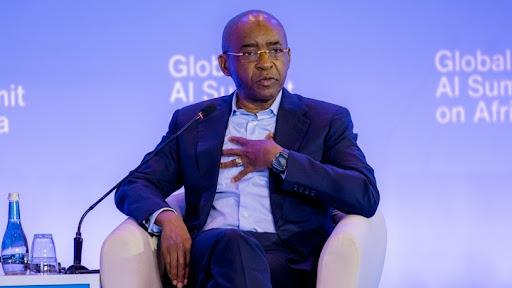
Cassava Technologies, founded by Strive Masiyiwa, and NVIDIA are among the initiative’s knowledge partners. Their inclusion is strategic. Cassava operates the continent’s largest pan-African fibre network and Africa Data Centres, while NVIDIA provides the GPU backbone powering global AI development. Together, they represent the two ends of the AI value chain the World Bank wants to democratize — connectivity and compute.
The initiative has an initial focus on Africa and Latin America, where the digital divide remains starkest.
Why this matters for Africa
The World Bank’s framing is blunt. More than two billion people were still offline globally in 2025. Internet use was just 23 percent in low-income countries compared to 94 percent in high-income countries. Even where coverage exists, millions cannot afford a smartphone or data, lack digital skills, or find no relevant services.
For COMESA, meeting in Harare this week under the theme “One Market in Motion,” that gap is the cost of doing business. A trader in Harare who cannot afford data cannot access regional e-commerce platforms. A farmer in Malawi without digital ID cannot receive mobile payments.
The World Bank Group’s strategy directly targets that bottleneck through four priorities that go beyond cables:
First, expanding reliable connectivity — from international subsea cables to national fibre and last-mile networks serving homes, schools, clinics and businesses. The Group says it will push infrastructure sharing, competition, and blended finance with guarantees to draw private capital into underserved markets. Where electricity and connectivity are both missing, it wants joint planning.
Second, making devices and data more affordable. The Bank will work with manufacturers, mobile operators, financial institutions and refurbishment businesses to lower entry-level smartphone prices and expand responsible pay-as-you-go models.
Third, expanding digital services and skills — including interoperable systems for digital identification, payments and secure information sharing, plus digital literacy linked directly to employment.
Fourth, building readiness for AI. This is where Cassava and NVIDIA come in.
Small AI, not big hype
Crucially, the World Bank is not talking about large, frontier models. Its language is “small AI — AI for the people.”
“Digital technology can help countries create jobs and make scarce resources go further. Realizing that potential requires a comprehensive approach — from reliable connectivity and affordable devices to digital skills and useful services,” said World Bank Group President Ajay Banga. “Our first digital strategy brings these pieces together, helping countries build the foundations to benefit from today’s digital tools and the promise of small AI.”
Small AI, as defined in the Bank’s Digital & AI Implementation Plan FY26-30, means tools adapted to specific tasks and local conditions — helping a farmer identify crop disease from a phone image, supporting a clinic health worker with diagnostic prompts, or helping an SME manage inventory and access finance.
That approach lowers the compute barrier. Instead of needing a national supercomputer, a country can tap shared GPU pools on a pay-as-you-go basis — the model the new initiative will pilot.
For Cassava Technologies, which already hosts cloud infrastructure through Liquid Intelligent Technologies and Africa Data Centres, including Azure Stack deployments that keep African data in Africa, the knowledge partner role aligns with its stated push for data sovereignty.
For Zimbabwe, where Liquid Intelligent Technologies Zimbabwe is the largest fixed internet provider and is driving AI and cybersecurity training through an MOU with the Ministry of Skills Audit, the World Bank’s strategy provides multilateral validation for what local players have been building.
Jobs lens
The Bank is deliberately linking digital to its five priority sectors for job creation: infrastructure and energy, agribusiness, health care, tourism and value-added manufacturing.
The logic is that digital helps businesses reach customers, improve productivity and access finance, while reducing the cost of delivering public services. But safeguards — privacy, cybersecurity and fraud protection — are built across all four priorities, not as an afterthought.
The full details are in the World Bank Group’s Digital & AI Implementation Plan and the World Development Report 2026: The Promise of Artificial Intelligence.
What is clear from Seoul is that the World Bank no longer sees digital as a sector. It sees it as the backbone for all sectors — and it has chosen an African-born technology group, Cassava Technologies, and the world’s leading AI chipmaker, NVIDIA, to help shape how emerging markets get onto that backbone.












Comments