

 By
By 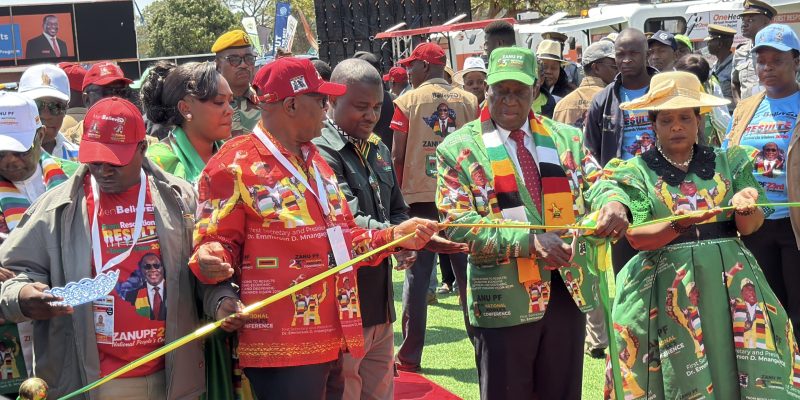
By Ross Moyo
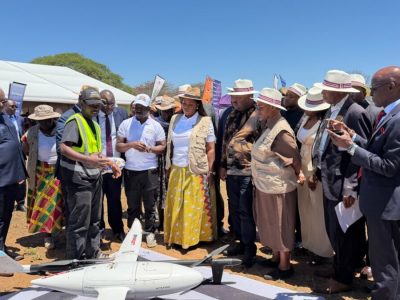
President Emmerson Mnangagwa today officially unveiled NetOne’s telehealth mobile kiosks at the 23rd Zanu-Pf People’s National Conference in Chinhoyi, marking a milestone in a partnership aimed at bringing healthcare closer to marginalised communities.
His Excellency commended NetOne for advancing the health agenda and supporting Vision 2030 with the launch of the 100 mobile health kiosks meant to assist those living in the rural areas.
Prior to the launch the president had challenged Netone to think outside the box and create a product that will urgently serve the marginalized communities in Zimbabwe without any need to be transferred to referral hospitals for mild and common illnesses while simultaneously attending to urgent and life saving emergency medical care.
“Our marginalized people need health solutions that effectively serve their needs so that we avoid the needless loss of lives. Hence, I commend your initiative,” said his Excellency during the tour.
Funded and supported by NetOne through its flagship OneHealth initiative, the project is being undertaken in conjunction with ZimSmart Villages and led by the ZANU PF Department of Health.
For NetOne, which is marking its 30th anniversary, the investment gives its anniversary a purpose beyond commemorating three decades of telecommunications services. It directs resources towards a need shared by every household: access to healthcare. The company says its 30th anniversary is not simply about celebration but about placing people’s wellbeing at the center.
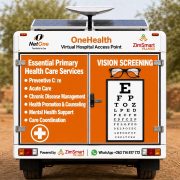
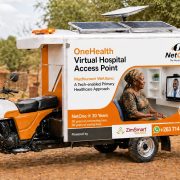
The planned rollout of 100 mobile health kiosks, 10 for each province, will bring essential health services closer to underserved communities. The initial phase features the deployment of 10 solarized, Starlink-enabled three-wheeler mobile health kiosks, with one allocated to each of Zimbabwe’s ten provinces.
The comprehensive exhibition at Chinhoyi also featured a complete access network comprising 10 solarized and Starlink-powered mobile health outreach tuk-tuks, two static telehealth kiosks equipped for diagnostics and virtual consultations, and 10 “Mudhumeni WeUtano” solarized bicycles to extend community mobilization and digital health promotion at grassroots level.
The model operates around a continuous cycle of arrival, screen, connect, navigation, refer, and follow up. At each kiosk, a nurse and community health worker will help identify health concerns, conduct approved checks, provide health information, and connect eligible patients to a clinician.




Comments