

 By
By 
State-owned telecommunications operator NetOne has launched OneFi Wireless, an unlimited home and office internet package priced at US$60, valid for 30 days. The release marks NetOne’s long-awaited entry into Zimbabwe’s competitive low-cost broadband market.
To access the service, subscribers must purchase a geo-locked SIM card for US$1 at any NetOne shop. Once activated, users can purchase the 30-day bundle by dialing *371# using standard airtime or *217# via OneMoney.
NetOne officially announced the package on September 28, confirming that a Fair Usage Policy (FUP) will apply to manage high-volume data traffic.
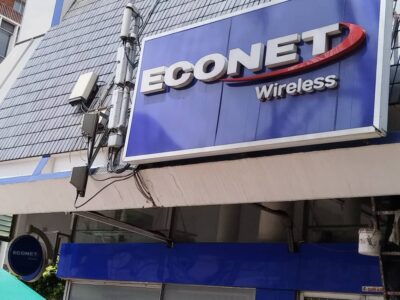
NetOne’s entry comes well after main competitor Econet launched its SmartBiz service in 2024 as satellite provider Starlink prepared its regional market entry. While NetOne took a significant amount of time to respond, its state-owned status allowed it the flexibility to move deliberately without the immediate market pressures faced by private competitors.
This delay appears to have allowed NetOne to observe rival offerings and avoid early design flaws. Rather than rolling out an unrestricted service that risks rapid network degradation, the operator opted for a structured approach designed around network capacity management.
The mandatory geo-lock has generated debate among potential users. Critics argue that a locked SIM diminishes value by preventing mobility, customers cannot transfer the line between their workplace, rural home, or holiday locations as they would with a standard mobile data bundle.
However, geo-locking is essential for sustaining an unlimited wireless service over a shared cellular infrastructure. Base stations have fixed capacity limits, and unrestricted heavy data consumers inevitably cluster around the busiest urban towers, causing speeds to collapse for all users on the cell site. Locking each SIM to a specific location enables NetOne to monitor subscriber density per base station and pause sales in an area once capacity is reached.
NetOne’s strategy directly reflects lessons from competitors who struggled with network overload:
- Liquid Home: Introduced WibroniX LTE in 2019 with full geographic mobility, but was forced to lock every line to registered customer addresses by 2020.
- Econet: Launched SmartBiz without geo-locks or enforced caps, eventually capping SmartBiz 5 at 5 Mbps in 2024. By mid-2025, speeds on congested lines dropped under 1 Mbps, even as standard bundles on the same hardware reached 70 Mbps.
- Starlink: Enforced strict 30-day roaming limits and passport checks to mitigate localized capacity saturation in areas like Harare. And also recently imposed a 10Mbps Speed Cap
By launching with geo-locking already in place, NetOne provides clear terms from day one rather than changing service rules later.
Key technical specifications remain unannounced. NetOne has not stated connection speeds, FUP data thresholds, whether the SIM is restricted to routers or works in smartphones, or if the service operates on 4G or 5G bands.
At US$60 per month, OneFi Wireless sits between Econet’s initial SmartBiz launch price ($45) and Starlink’s Priority packages (starting around $100 plus taxes). Prospective buyers should confirm local tower coverage and relocation policies at NetOne branches











Comments