

 By
By 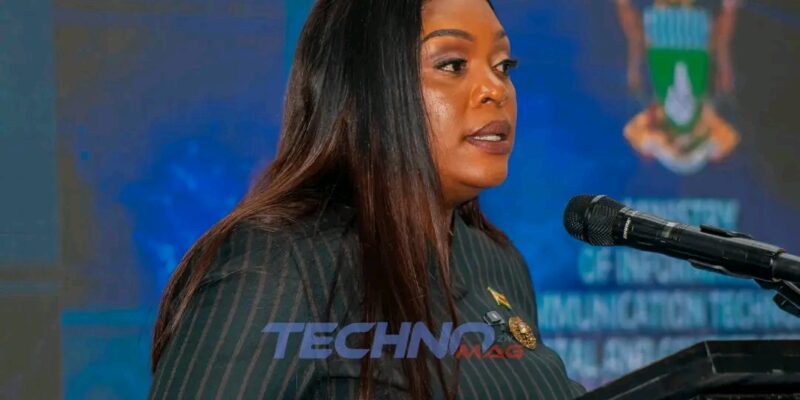
Minister of ICT, Postal and Courier Services, Hon. Tatenda Mavetera says she will establish a National Deepfake Detection and Public Media Literacy Taskforce before the end of the year as part of efforts to counter the growing threat posed by artificial intelligence-generated disinformation, the for Africa and Arab States.
Speaking at the ongoing 2026 ITU Inter-Regional CyberDrill for Africa and Arab States, the minister said the new task-force would bring together forensic technologists, legal experts, media organizations and civil society to strengthen the country’s ability to detect and respond to deepfake content.
“Before this year ends, I am establishing a dedicated national task-force combining forensic technologists, legal experts, media houses, and civil society,” said Hon. Mavetera.
Mavetera also said the task-force would have a dual mandate, deploying deepfake detection technologies within Zimbabwe’s national Computer Emergency Response Team (CERT) while spearheading a nationwide public awareness campaign aimed at improving digital literacy.
“Their mandate is two-fold: first, to deploy deepfake detection tools within our national CERT, and second, to launch a massive public media literacy campaign under the banner ‘Pause. Verify. Share.’,” she said.
Minister Mavetera said the initiative was necessary as deepfake technology increasingly threatens public trust, democratic institutions and national security.
She warned that synthetic media could be exploited to impersonate public officials, manipulate financial markets and spread false information capable of triggering panic.
“Our citizens, particularly in rural communities, must be empowered to question what they see and hear,” said Mavetera.
Growing global concerns over the use of AI to create convincing fake videos, images and audio that can be used for fraud, political manipulation and the spread of misinformation have led to the meeting of different member states in a bid to provide solutions.
Addressing delegates from across Africa and the Arab States, the Hon. Mavetera described deepfakes as one of the most dangerous emerging cyber threats, warning that advances in artificial intelligence have made it increasingly difficult to distinguish between authentic and fabricated digital content.
“Cybersecurity is no longer just about confidentiality and integrity of systems; it is about the integrity of truth itself,” she said.
To showcase the potential impact of malicious AI-generated content, she asked delegates to imagine waking up to a convincing video of a head of state declaring war on a neighboring country.
“The video is perfect. The voice, the mannerisms, the signature gestures—all flawless. And all completely fabricated. In the minutes it takes to expose the lie, markets have crashed, diplomatic relations have ruptured, and people have taken to the streets. This is not science fiction. This is the weaponization of artificial intelligence against truth,” said Hon. Mavetera.
The deepfake task-force forms part of six cybersecurity commitments announced during the CyberDrill, which also include establishing a National Cyber Incident Response Team, strengthening cyber hygiene among small businesses, expanding cybersecurity skills development, fast-tracking implementation of the African Union’s Malabo Convention, and institutionalizing annual national cyber drills.













Comments