

 By
By 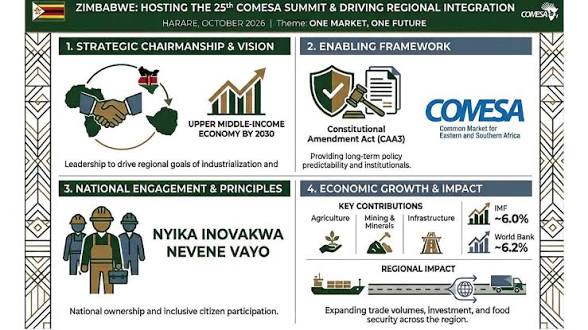
By Ross Moyo
Zimbabwe wants COMESA trade to move at the speed of data, not paperwork.
As it prepares to assume the COMESA Chairmanship for 2026-2027, government is putting digital customs systems, coordinated border agencies and interoperable payment platforms at the center of its trade agenda.
Economist Persistence Gwanyanya said the chairmanship must be judged on practical results, not summits.
“The real test will not be the number of meetings held, but whether we can reduce the cost and time of moving goods, services and payments across borders,” he said.
The tech plan:
1. Digital customs systems at strategic borders like Chirundu and Forbes to automate declarations, risk management and cargo release.
2. Coordinated border agencies – One-stop processes where ZIMRA, Immigration, Standards and Health work from a single system to cut duplication.
3. Interoperable payment platforms – To allow traders to settle cross-border invoices in local and regional currencies without hard currency bottlenecks. “If we facilitate the movement of goods but make settlement difficult, then we have only solved half of the problem,” Mr Gwanyanya said.
The upgrades are being paired with infrastructure work. The US$900 million Harare-Chirundu Highway rehabilitation is underway and due in 18 months. Chirundu links Zimbabwe to Zambia, DRC and the North-South Corridor. Forbes links to Mozambique and Indian Ocean ports.
With intra-COMESA trade stuck at 7-9% vs EU’s 60%, officials say digitizing borders is the fastest way to hit the bloc’s target of 25% intra-regional exports by 2026.











Comments